The Best Blank T-Shirts for Brands in 2026: The Operator's Guide
The Best Blank T-Shirts for Brands in 2026: The Operator's Guide
3 MINUTES
March 6, 2026
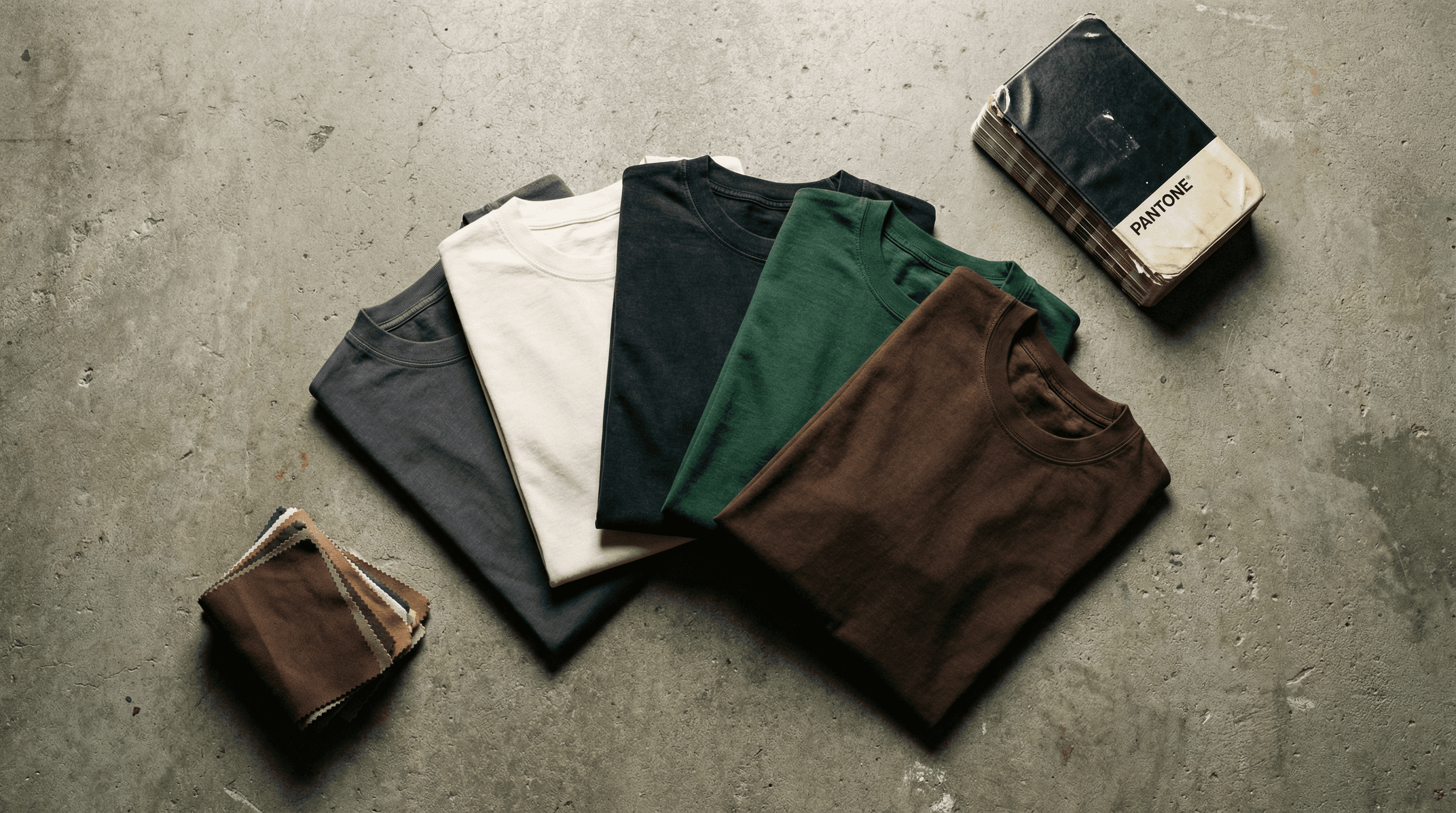
Here is the truth about blank t-shirts that most brand owners learn too late: the blank is not the canvas. The blank is the product. Every decision you make about weight, construction, fabric, and finish is a brand decision, not a sourcing decision. The brands that win at the premium end of the market are not the ones with the best graphics. They are the ones who chose the right foundation and built on top of it.
The problem is that the blank market has exploded. A decade ago, you had Gildan, Hanes, and a handful of premium options. Today, there are dozens of brands claiming to have the "perfect" heavyweight tee, and the specs are close enough that the differences are hard to see on a product page. You need to understand what you are actually buying before you commit your brand to a blank.
This guide breaks down the ten best blank tees on the market for brand operators in 2026. We have researched the specs, the construction, the origin, and the positioning of each one. This is not a ranking of the "softest" or the "most popular." It is a framework for choosing the right blank for your specific brand, your specific customer, and your specific price point.
The Framework: What Actually Matters in a Blank Tee
Before you look at a single product, you need to understand the five variables that separate a great blank from a mediocre one. Most brand owners focus on weight and ignore everything else. That is a mistake.
Weight (oz/gsm) is the most commonly cited spec, and it matters. A heavier tee drapes better, holds its shape longer, and communicates quality in a way that a lightweight tee simply cannot. The standard for a premium blank in 2026 is 6.5 oz (220 gsm) at the minimum. Anything under that is a commodity. The upper end of the market runs from 7.5 oz (255 gsm) to over 10 oz (340 gsm) for true luxury-tier blanks.
Yarn count is the spec that most brand owners overlook entirely, and it is arguably more important than weight. Yarn count refers to the thickness and quality of the individual threads used to knit the fabric. A 16-singles yarn is coarser and more rustic. A 22-singles yarn is smoother and more refined. A 26-doubles yarn is the premium tier, combining two 26-singles yarns for exceptional softness and durability. When you see a blank that feels noticeably different from others at the same weight, the yarn count is usually why.
Construction covers the structural decisions: side-seamed versus tubular, drop shoulder versus set-in shoulder, and the quality of the collar and hem finishing. Side-seamed tees allow for a more tailored, modern fit. Tubular tees have no side seams, which gives them a vintage, relaxed feel. Drop shoulders create the oversized, streetwear-forward silhouette that dominates the premium market right now. The collar is a detail that most brand owners never think about until they see it on a customer, and then they cannot unsee it.
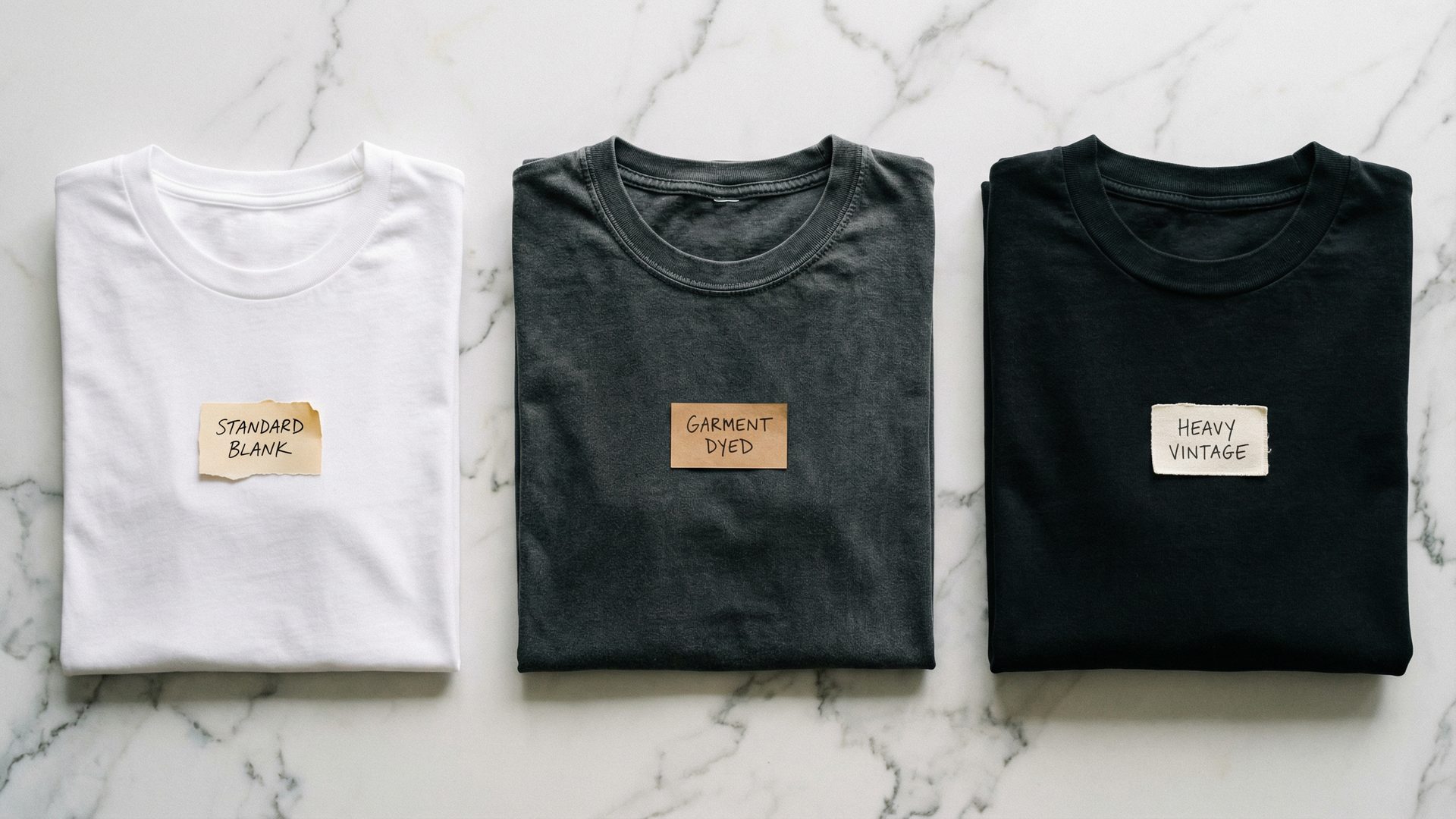
Finishing is where the character of the blank is established. Enzyme washing breaks down the surface fibers to create a softer, more broken-in hand feel. Garment dyeing involves dyeing the finished garment rather than the raw fabric, which pre-shrinks the tee and creates a richer, more complex color. Pigment dyeing uses larger pigment particles that sit on the surface of the fabric, creating a more vintage, faded aesthetic over time. Each finishing technique creates a different brand signal.
Origin is a brand decision as much as a production decision. Made in USA carries a specific cultural weight that is worth a significant premium in the right market. Made in Portugal signals European craftsmanship. Made in Bangladesh or Pakistan is not a negative, but it requires a different brand story to justify the price point.
The Top 10 Blank Tees for Brand Operators in 2026
Rank | Brand & Style | Weight | Yarn | Origin | Best For |
1 | Los Angeles Apparel 1801GD | 6.5 oz / 220 gsm | 18/1 open-end | Made in USA (Los Angeles) | Brands built on ethical production and American manufacturing |
2 | WATC Studio Oversized Boxy Tee | 10.4 oz / 240 gsm | Not specified | Made in Portugal | Luxury and premium brands where quality is non-negotiable |
3 | AS Colour Classic Oversized Tee 5069 | 6.5 oz / 220 gsm | 22-singles | Made in Bangladesh | Graphic-led brands that need a reliable, print-ready canvas |
4 | Cotton Collective Oversized Box S/S Tee | 7.5 oz / 255 gsm | 16-singles | Not specified | Streetwear brands that want a vintage, enzyme-washed hand feel |
5 | Zuni Sportswear ZS4010 Oversized Tee | 7.7 oz / 260 gsm | 26 double ring-spun | Not specified | Brands that want premium fabric quality at a competitive price |
6 | Made Blanks Homeroom T-Shirt 2.0 | 7 oz / 235 gsm | 16-singles | Not specified | Brands that want a tubular, seam-free construction |
7 | Lane Seven LS16005 Urban Heavyweight | 7.66 oz / 260 gsm | 26 doubles | Made in Pakistan | Mid-tier premium brands looking for value at a high yarn count |
8 | Shaka Wear SHGDD Max Heavyweight | 7.5 oz / 255 gsm | 16-singles | Not specified | High-volume brands that need a budget-friendly heavyweight |
9 | Comfort Colors 1717 | 6.1 oz / 205 gsm | Not specified | Made in Honduras | Brands that want a classic garment-dye look with a wide color range |
10 | Bella+Canvas 3010 Heavyweight Tee | 6 oz / 203 gsm | 30-singles | Made in USA/Mexico | Brands that want a softer, more contemporary heavyweight option |
Deep Dive: The Top 5 Reviewed
1. Los Angeles Apparel 1801GD: The Cultural Standard
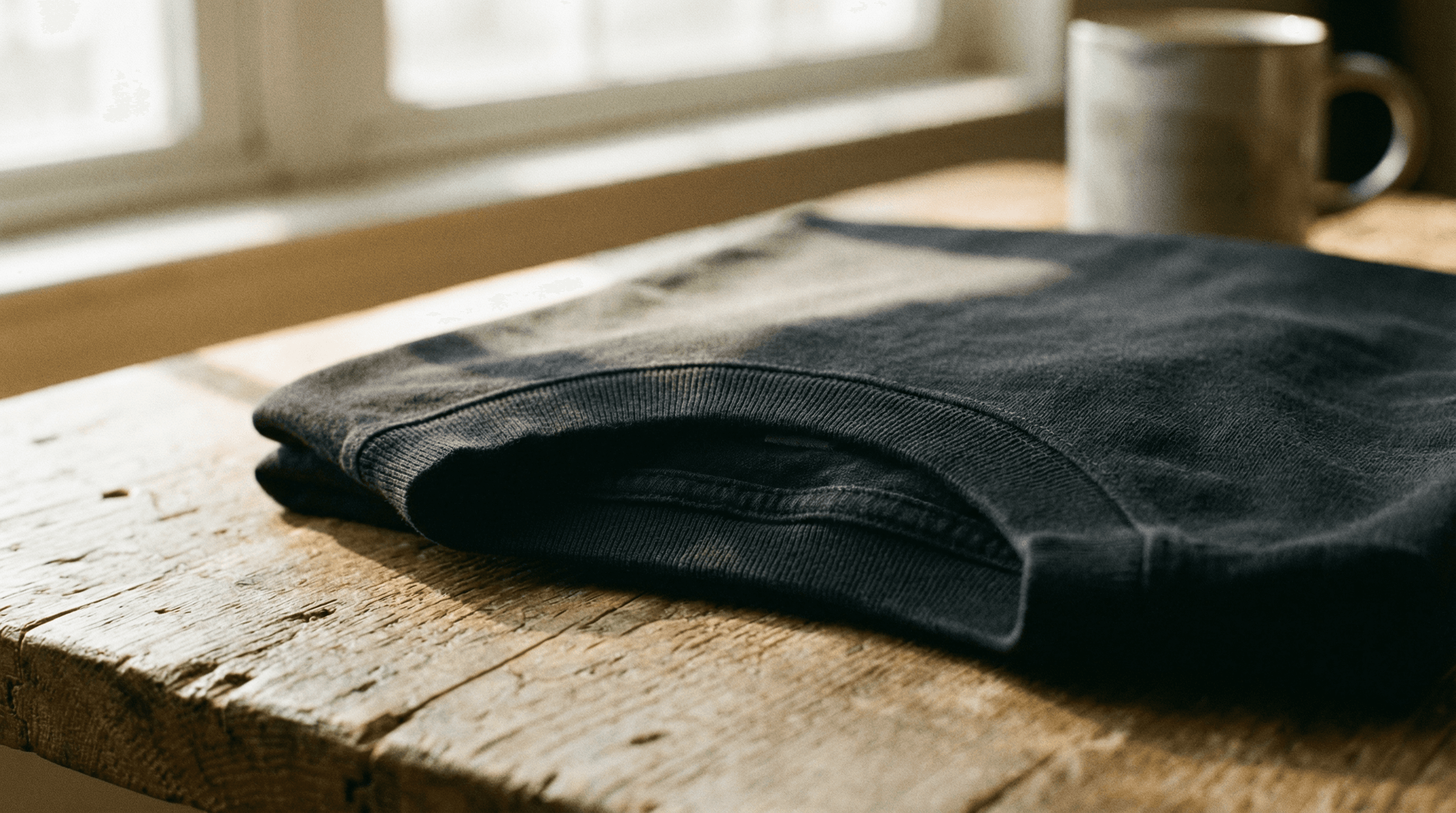
Los Angeles Apparel has become the undisputed reference point for premium blank tees, and the 1801GD is the reason. At 6.5 oz with an 18/1 open-end cotton construction, it is not the heaviest tee on this list. But the garment dye process, the high-ribbed collar, and the fact that it is knitted, cut, sewn, and dyed entirely in Los Angeles give it a character that no other blank can replicate. The garment dye process pre-shrinks the fabric and creates a broken-in feel from the first wear, which is exactly what the premium streetwear customer expects. The color palette, which includes Mushroom, Patchouli, Rose Quartz, and Vintage Black, is curated with the same care as a fashion brand's seasonal offering.
The brand story is also a genuine differentiator. Workers at the Los Angeles Apparel factory earn up to $25 per hour and receive healthcare benefits, a 401k, and paid sick days. For brands that want to build on a foundation of ethical production, that story is worth real money at retail. The 1801GD retails for $26 direct-to-consumer, which means a brand can comfortably price a printed or embroidered version at $60 to $80 and justify every dollar of the markup.
The one consideration: the open-end cotton construction means the fabric has a slightly rougher texture than a combed or ring-spun alternative. For brands that prioritize a silky hand feel, the AS Colour 5069 or the Bella+Canvas 3010 will be a better fit. For brands that want a garment with genuine character and a story that sells itself, the 1801GD is the standard.
2. WATC Studio Oversized Boxy Tee: The Luxury Tier
At 10.4 oz (240 gsm), the WATC Studio Oversized Boxy Tee is in a category of its own. This is not a blank for a brand that is still figuring out its identity. This is a blank for a brand that knows exactly who it is and is willing to pay for the product to match. Made in Portugal from 100% organic cotton grown without chemicals or GMOs, the WATC tee is the kind of product that communicates quality before a single word of copy is written. The construction is flawless, with a tight 1x1 rib collar with 5% Lycra that holds its shape indefinitely, dropped shoulders, and a perfectly boxy fit that drapes with authority.
The color range is exceptional, spanning over 20 options including Vintage Olive, Cold Blue, Cobalt Blue, and Vintage Tan. The tee is untagged, which means brands can apply their own woven label without any additional processing. The wholesale availability makes it viable for brand programs at scale. For a brand operating in the $100 to $150 tee category, this is the blank that makes the price point feel earned rather than aspirational.
3. AS Colour Classic Oversized Tee 5069: The Printer's Choice
AS Colour is a New Zealand-founded brand with a reputation built entirely on consistency and quality control. The 5069 is their answer to the oversized streetwear moment, and it is a technically excellent blank. The 22-singles combed cotton creates a smooth, tight surface that is ideal for screen printing and DTG printing. The shoulder-to-shoulder tape and double-needle hems are construction details that signal durability. The preshrunk fabric means the fit is predictable across the entire size run, which is a significant operational advantage for brands that sell online.
The 5069 retails at $24 direct-to-consumer, with bulk pricing dropping to $15.60 at 50 units. For brands that are building a graphic-led program and need a reliable, high-quality canvas that will not introduce variables into the print process, this is the safest and most defensible choice on the market.
4. Cotton Collective Oversized Box S/S Tee: The Vintage Specialist
Cotton Collective has built a niche by perfecting the enzyme wash. Their 7.5 oz tee is treated after construction to break down the surface fibers, resulting in a hand feel that is noticeably softer and more broken-in than an untreated blank at the same weight. The color palette leans heavily into vintage hues, with options like Chocolate, Forest Green, and Wheat sitting alongside cleaner solids. The fit is a classic drop shoulder with an oversized boxy silhouette that photographs exceptionally well.
One important technical note for brand operators: enzyme-washed and pigment-dyed blanks can require a poly blocker when screen printing to prevent dye migration. This adds a step and a cost to the printing process. It is not a dealbreaker, but it is a variable that needs to be factored into your production planning. For brands that want a vintage, lived-in aesthetic and are willing to manage the additional print complexity, the Cotton Collective tee is one of the best options on the market.
5. Zuni Sportswear ZS4010: The Fabric Nerd's Choice
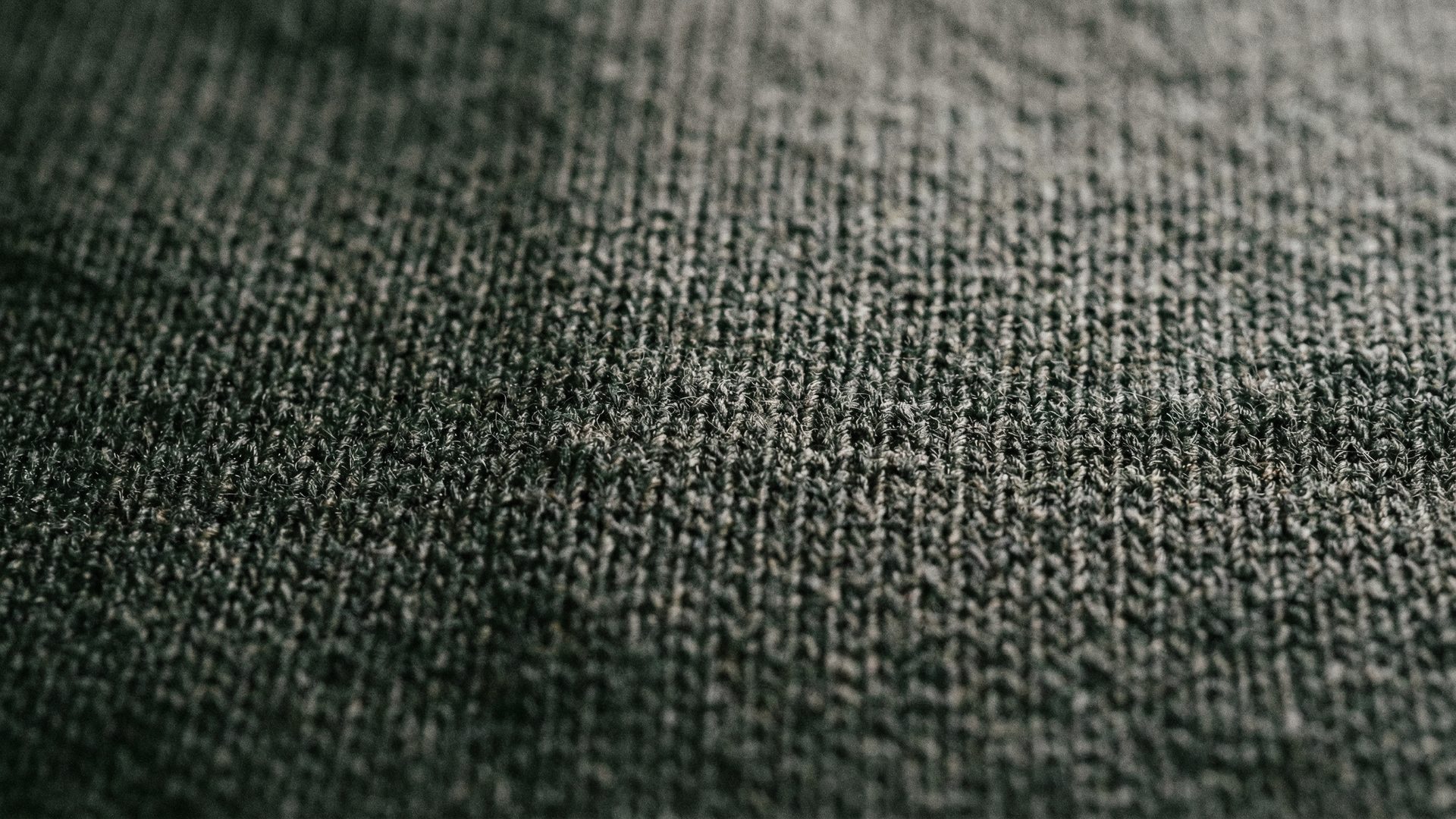
Zuni Sportswear is a brand for operators who care about the details that most brand owners never see. The ZS4010 is made from 26 double ring-spun combed cotton, a premium yarn construction that combines two 26-singles yarns for exceptional softness and durability. At 7.7 oz (260 gsm), it has a substantial, confident weight that communicates quality in the hand. The construction is thorough: ribbed neckband, taped back neck, 1/8 top stitch at the neck, and double-needle stitching at the hem and sleeves. Both pigment dye and reactive dye options are available, which gives brand operators flexibility in their finishing approach.
The construction quality at this price point is competitive with anything on this list. For brands that want to build a reputation on the quality and durability of their product, the ZS4010 is a blank that rewards the operator who pays attention.
The Insider's Guide: Blanks You Won't Find on Google
The brands on this list represent the top tier of publicly available blanks. But for operators deep in the industry, there is another level. These are the blanks you cannot find on Google, the ones that operate on a different model entirely. They are the apparel industry's open secret.
A prime example is VANTA. They have no public website, no sales team, and no marketing. They produce some of the most sought-after heavyweight fleece and jersey in the world, and they sell it exclusively to a private list of clients via a shared spreadsheet of available inventory. When it's gone, it's gone. This model is built on scarcity, quality, and relationships. These are small, obsessive mills and factories that prioritize their craft over scale. They do not want to deal with the noise of the open market.
For a brand operator, this presents a challenge. You cannot simply find these suppliers. You have to be in the network. This is where a true production partner becomes an unfair advantage. A partner like HH has spent years building relationships with these private mills and boutique suppliers. We know who has what, when they have it, and how to get it. We can source these exclusive blanks for our clients, giving them access to a level of quality and exclusivity their competitors cannot find.
The Ceiling: When to Graduate from Blanks to Cut-and-Sew
Blanks are the foundation. They are the single best way to test ideas, launch a brand, and build initial momentum. But every great brand eventually hits the ceiling of what a blank can do. There are two triggers that tell you it is time to graduate:
Volume. When you are ordering thousands of units per style, the economics of cut-and-sew begin to look very attractive. You can often produce a higher-quality, fully custom garment for a similar or even lower price than a premium blank. The cost of developing a pattern and managing production is amortized over a larger number of units, making the per-unit cost highly competitive.
Vision. This is the more important trigger. You hit the vision ceiling when your creative ambition can no longer be contained within a pre-made garment. You want a specific fit that no blank offers. You want a unique fabric that is not available on the wholesale market. You want a custom color that is core to your brand's DNA. You want a construction detail—a seam, a stitch, a panel—that is entirely your own. This is the point where you move from decorating a product to creating one.
Making the switch to cut-and-sew is not an indictment of blanks. It is a sign of success. It means you have built a brand with a clear point of view and the demand to support a fully realized product vision. When you are ready to make that leap, the right partner is critical. The same partner who can help you source the best blanks can also manage the entire cut-and-sew process, from tech pack to final delivery, ensuring your vision is executed flawlessly.
This matters because the blank is the first thing your customer feels. Before they see the graphic, before they read the label, before they experience the brand, they feel the fabric. That first touch is a brand moment, and it happens in a fraction of a second. The brands that win are the ones who make that moment count.
When Blanks Are No Longer Enough
There is a ceiling to what a blank can do for your brand. At some point, the fit you want does not exist in the blank market. The fabric weight or construction you need is not available off the shelf. The color you are imagining cannot be achieved through a standard garment dye process. When you hit that ceiling, it is time to consider cut-and-sew.
Cut-and-sew is not as intimidating as it sounds. With a minimum order quantity starting at 144 units per style and a starting budget of around $15,000 for a 5-6 style program, it is accessible to brands that are already doing real volume. The payoff is a product that is entirely yours: your fit, your fabric, your construction, your finish. No other brand can buy the same blank and put their logo on it. If you want to understand what that transition looks like in practice, the complete cut-and-sew guide for brand owners is the place to start.
FAQ
What is the best blank t-shirt for screen printing?
The AS Colour Classic Oversized Tee 5069 is the most reliable choice for screen printing. Its 22-singles combed cotton creates a smooth, tight surface that holds ink cleanly, and its consistent construction means the print will register correctly across the entire size run. For garment-dyed or enzyme-washed blanks, a poly blocker is required before printing to prevent dye migration.
What weight blank tee should I use for a premium brand?
A minimum of 6.5 oz (220 gsm) is the standard for a premium blank in 2026. For a true luxury positioning, 7.5 oz (255 gsm) and above is the target. The WATC Studio tee at 10.4 oz (240 gsm) represents the upper end of what is available in the blank market.
What is the difference between garment dye and pigment dye?
Garment dye means the finished garment is dyed after construction, which pre-shrinks the fabric and creates a richer, more complex color. Pigment dye uses larger pigment particles that sit on the surface of the fabric, creating a more vintage, faded aesthetic that deepens over time with washing. Both techniques create a broken-in feel, but pigment dye has a more pronounced vintage character.
What does "tubular" construction mean in a t-shirt?
A tubular tee is knit in a continuous tube, which means there are no side seams. This gives the tee a more vintage, relaxed feel and a slightly different drape than a side-seamed tee. The Made Blanks Homeroom T-Shirt 2.0 is the best example of a tubular construction on this list.
What is the difference between 16-singles and 26-doubles yarn?
Singles refers to a single strand of yarn. A higher number means a finer, smoother yarn. Doubles means two strands are twisted together, which creates a denser, more durable fabric. A 26-doubles yarn is significantly softer and more durable than a 16-singles yarn at the same weight, which is why it commands a price premium.
When should I stop using blanks and move to cut-and-sew?
When the fit, fabric, or construction you need does not exist in the blank market, it is time to consider cut-and-sew. A good rule of thumb: if you are customizing a blank with a custom label, custom hem tag, and a specific wash or dye process, you are already most of the way to a custom product. Cut-and-sew gives you full control over every variable, starting at 144 units per style.