How Premium Custom Merchandise Becomes a Product System: Cherry LA’s Mid Summer Classics
Cherry LA’s Mid Summer Classics shows how premium custom merchandise becomes a product system, from a disciplined price ladder to full-package production.

How Premium Custom Merchandise Becomes a Product System: Cherry LA’s Mid Summer Classics
3 MINUTES
August 27, 2026
Most brands make the same mistake when they build a city, team, event, or community capsule. They find the loudest cultural signal, put it on a familiar garment, order a few hundred units, and call the result a collection. The logo carries the first click, but the product has nothing else to say. By the second drop, the buyer has already seen it all.
The License-Only Trap is seductive because cultural equity feels like a shortcut. A city name, team mark, artist association, or event badge comes with years of recognition. But no borrowed reference can make up for a weak silhouette, a flat product ladder, forgettable trims, or the absence of a point of view. The brands that last translate a cultural moment into their own product rules.
Cherry LA’s current Mid Summer Classics capsule offers a clear case study. The live collection takes recognizable Los Angeles sports-world codes and organizes them across headwear, tees, fleece, a women’s V-neck, and a $598 hero jacket. The result is not interesting because every piece is loud. It is interesting because the capsule gives each piece a specific job, price point, and degree of brand signal.
The direct answer: Build premium custom merchandise as a product system, not a graphic program. Start with the cultural moment, then define the collection’s fit blocks, category roles, color and trim rules, price ladder, and approval process before the first logo placement goes into production.
How do you create a premium apparel capsule without making it feel like generic merchandise?
You create a premium apparel capsule by deciding what the collection has to accomplish before deciding what it should say. The cultural reference provides the raw material. The product system turns it into something people want to own and wear after the moment has passed. That system needs a coherent silhouette strategy, an entry product, a repeat purchase product, an emotional middle tier, and a hero piece that shows the market what the brand is capable of.
Cherry LA already had the ingredients for this approach before Mid Summer Classics appeared on the site. Co-founders Joseph Perez and David Levy launched the brand in 2017, drawing on their families’ long experience in clothing manufacturing and on a studied interest in American culture, cars, fashion, and architecture from the 1950s through the 1990s. MR PORTER described the brand as the intersection of streetwear and classic Americana, translated through a contemporary and inclusive point of view.
That matters because the current capsule has a foundation to stand on. The product pages show Los Angeles baseball codes, Royal blue, and sport-derived marks. Yet the collection still carries a small red Cherry identifier through the hoodie and championship jacket. The important move is not simply using a familiar cultural reference. It is maintaining an author brand inside it.
Cherry LA turns a city code into an assortment, not a one-product stunt
The Mid Summer Classics collection page currently presents eleven visible products. At the accessible end sit mesh truckers at $74 and nylon hats at $78. The core layer includes a women’s V-neck tee at $88 and pocket tees at $98. A Royal or Heather Grey hoodie occupies the $198 middle tier, while the Royal Championship Jacket establishes the $598 high point.
That price ladder has a commercial purpose. Headwear lets a customer enter the world without a major purchase. The pocket tee becomes the uniform. Fleece carries the strongest daily emotional pull. The championship jacket establishes the ceiling, creating a product that the entire capsule can aspire toward even if only a smaller portion of the audience buys it. The collection does not need every customer to purchase the $598 jacket. It needs the jacket to make the $198 hoodie and $98 tee feel more authored.
Product role | Current Mid Summer Classics example | Live listed price | What the role does for the collection |
|---|---|---|---|
Access point | Mesh Trucker | $74 | Builds an approachable first purchase around the collection code. |
Accessory reinforcement | Nylon Hat | $78 | Adds a second, distinct entry product rather than repeating the same cap. |
Silhouette expansion | Women’s V-Neck Tee | $88 | Broadens the line beyond a standard unisex tee and hoodie uniform. |
Core uniform | Classic Pocket T-Shirt | $98 | Carries the everyday version of the story and a repeatable fit proposition. |
Emotional center | Pullover Hoodie | $198 | Gives the collection a high-visibility, daily-wear fleece item. |
Hero product | Championship Jacket | $598 | Establishes premium intent, visual stakes, and a halo over the rest of the drop. |
Source: Cherry LA’s live Mid Summer Classics collection, accessed 28 August 2026.
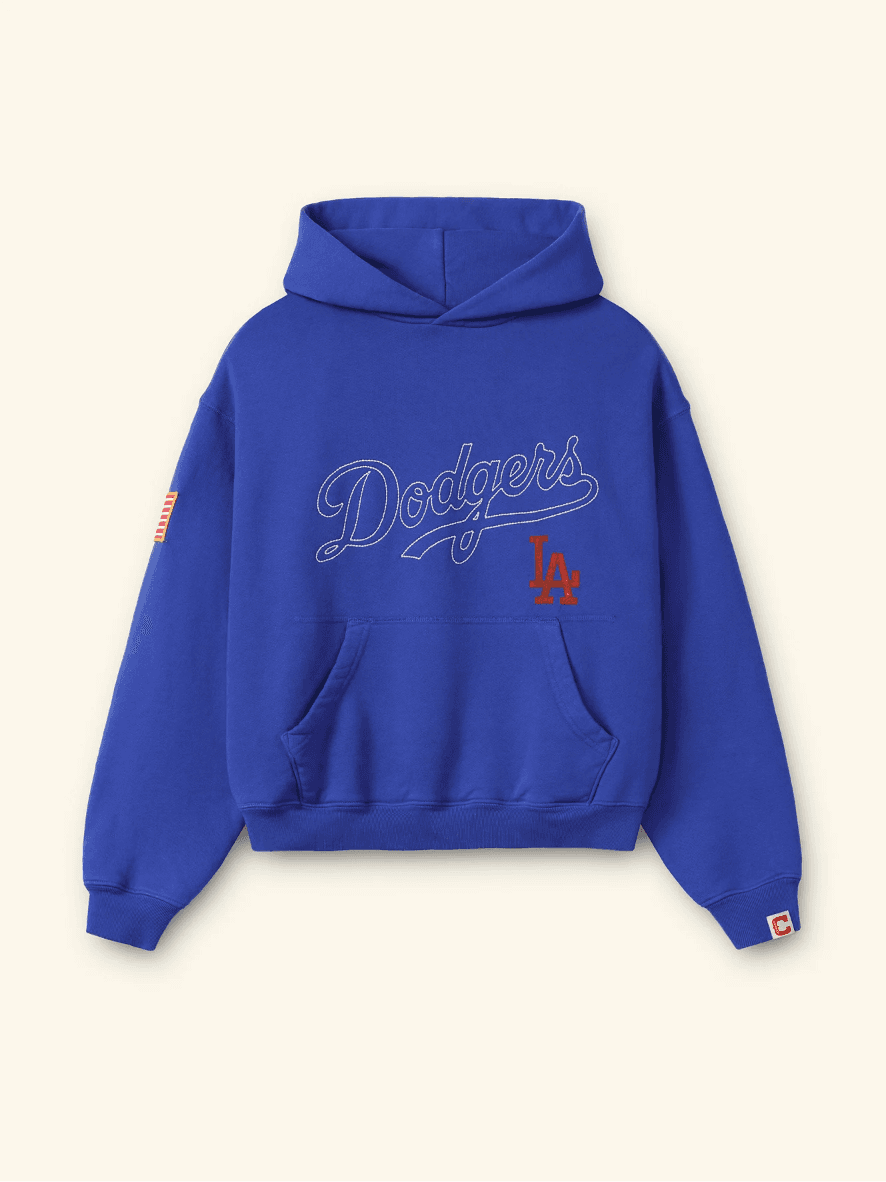
The retail page also shows discipline in proportion. The hoodie’s published chest-across-front measurement runs from 25.5 inches in XS to 30.5 inches in XXL, with body length from 23 to 28 inches. The pocket tee is narrower and longer, ranging from 20.5 to 25.25 inches across the chest and 25.5 to 30.5 inches in body length. That is a tangible product-system choice. It creates a shorter, broader outerwear and fleece block against a more everyday tee block, so the line has more to offer than the same garment in different graphics.
The License-Only Trap: when the cultural mark does all the work
The License-Only Trap begins when a team, location, creator, or event logo becomes the brief. This produces a shallow collection because the product team starts with decoration and works backward. The garments are usually standard blanks, the color palette has no hierarchy, the price range is flat, and the only reason to own the product disappears when the campaign ends.
The solution is to treat the cultural reference as one layer in a larger design language. Decide which products should feature the reference at full volume and which need quieter signals. Establish an author-brand element that recurs across categories. In this capsule, the prominent Los Angeles motifs carry the immediate recognition, while the small red Cherry detail helps the pieces remain Cherry LA product rather than anonymous sports apparel. That is an observation from the live product photography, not a claim about licensing terms or decoration methods.
A serious capsule needs rules for what does not appear as much as for what does. If every SKU gets the largest mark, the product loses hierarchy. If every garment uses the same color, it becomes a uniform. If every piece is an entry-price T-shirt, the release never develops aspiration. Your customer should be able to understand the world in three seconds and then discover more product logic each time they touch a different item.
What products should be in a premium city, event, or community capsule?
A premium city, event, or community capsule needs six roles: an access item, an accessory, a core uniform, a differentiated silhouette, an emotional middle-tier layer, and a hero product. The exact category mix changes with the audience, but the jobs do not. You are building a reason for a new customer to enter, a reason for an existing customer to trade up, and a reason for the market to understand the collection’s ambition.
Cherry LA’s Mid Summer Classics approach makes this logic visible across headwear, tees, fleece, and outerwear. The capsule uses a controlled working palette of Royal, Heather Grey, Vintage Black, Vintage White, Grey, and Camo. Royal carries the strongest place signal while the neutrals make the core pieces more wearable outside a single game-day context. The assortment also creates product movement. A customer can begin with a hat, return for a tee, then make the considered purchase on a hoodie or jacket.
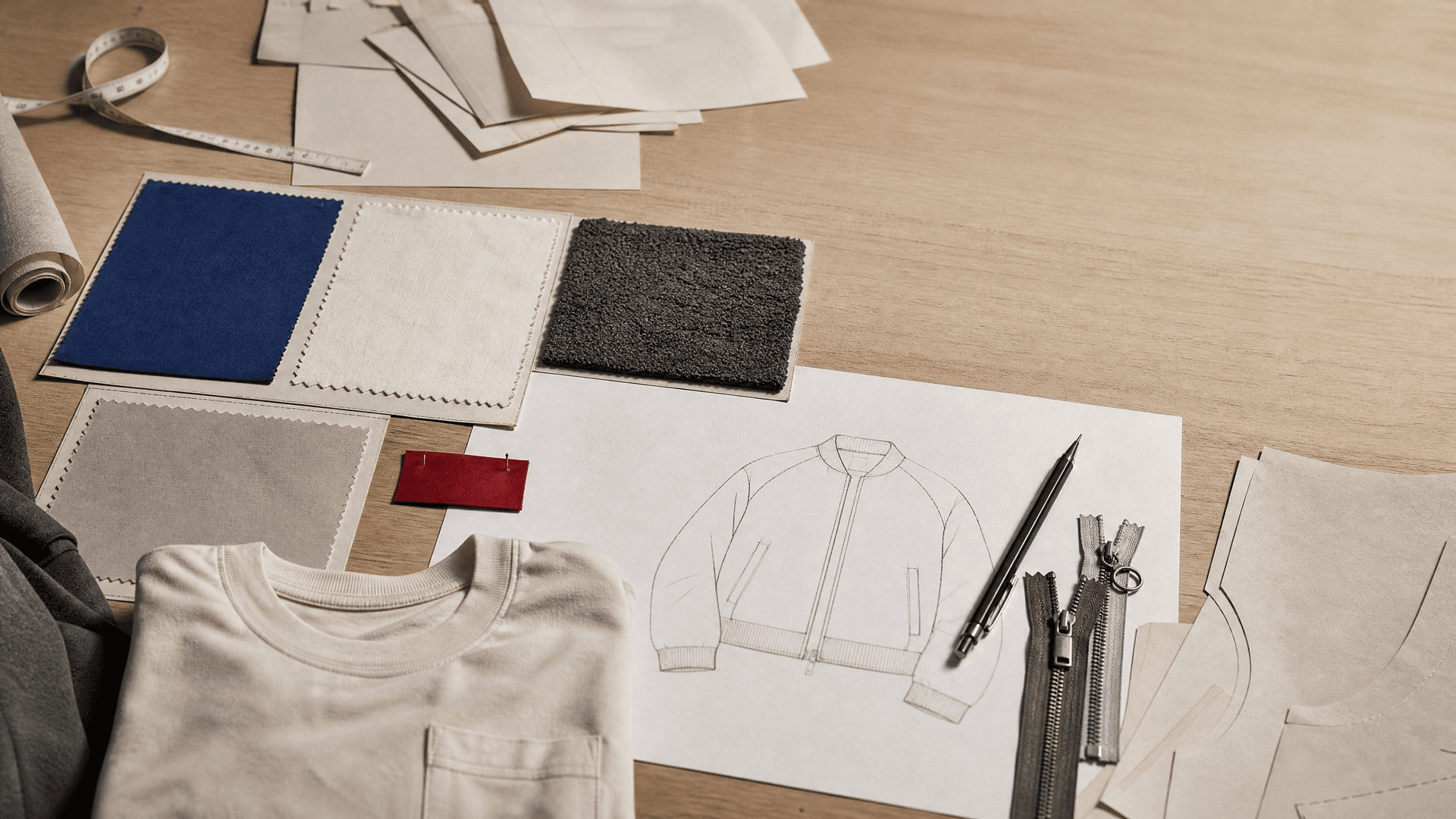
A comparable HH project begins with an assortment architecture before creative exploration. We define the customer, wearing occasions, product tiers, size range, color roles, and the visual hierarchy of every decoration. We then translate that system into apparel development: tech packs, construction callouts, fit blocks, measurement specifications, decoration-placement maps, trim cards, packaging direction, and sample approvals. That process protects the collection when the reference image becomes a product in a factory, not just a deck in a review meeting.
A great capsule starts in the development calendar, not at the product shoot
The product page is the final mile of the work. The collection is won or lost months earlier when the team locks the fit, material behavior, decoration scale, and quality gates. A founder or Head of Brand who wants premium custom merchandise needs to decide what the buyer should feel in the hand, how the item should fit on different body types, which elements need to survive repeated wash and wear, and which details are worth paying for before the bulk order gets released.
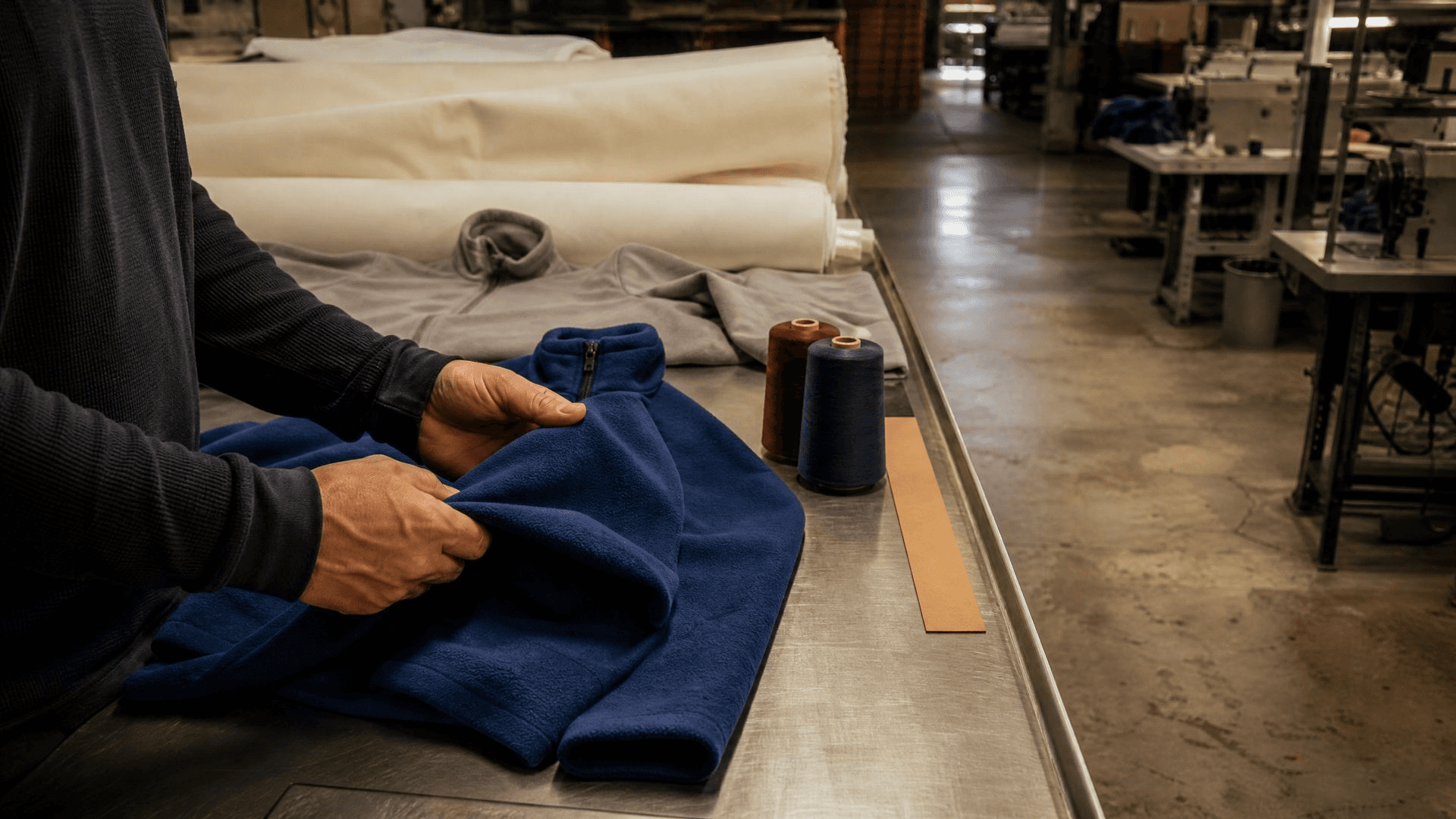
Cherry LA’s founders have publicly described a close-to-production philosophy. MR PORTER reports that the brand’s collections are made in South Central, California and that fabrics are sourced locally where possible. Levy described the benefit of local production as the ability to see, touch, and feel pieces throughout the process. The HH lesson is not that every project requires a local factory. The lesson is that every premium project requires a development process close enough to the decisions that determine product quality.
Development gate | Decision to lock | What fails if you skip it |
|---|---|---|
Product brief | Audience, occasion, tier, and product job | The assortment becomes an unconnected set of ideas. |
Fit and measurement block | Chest, body, sleeve, grading, and intended ease | Samples fit unpredictably and size consistency falls apart. |
Color and material approval | Approved lab dips, fabric hand feel, weight, and test requirements | Blue becomes three different blues across fabrications and suppliers. |
Decoration and trim sample | Artwork scale, location, thread, print, patch, label, and zipper choices | The idea looks correct on screen and wrong on the garment. |
Pre-production sample | Final approved construction, packaging, and quality standard | Bulk production becomes the first real test, which is too late. |
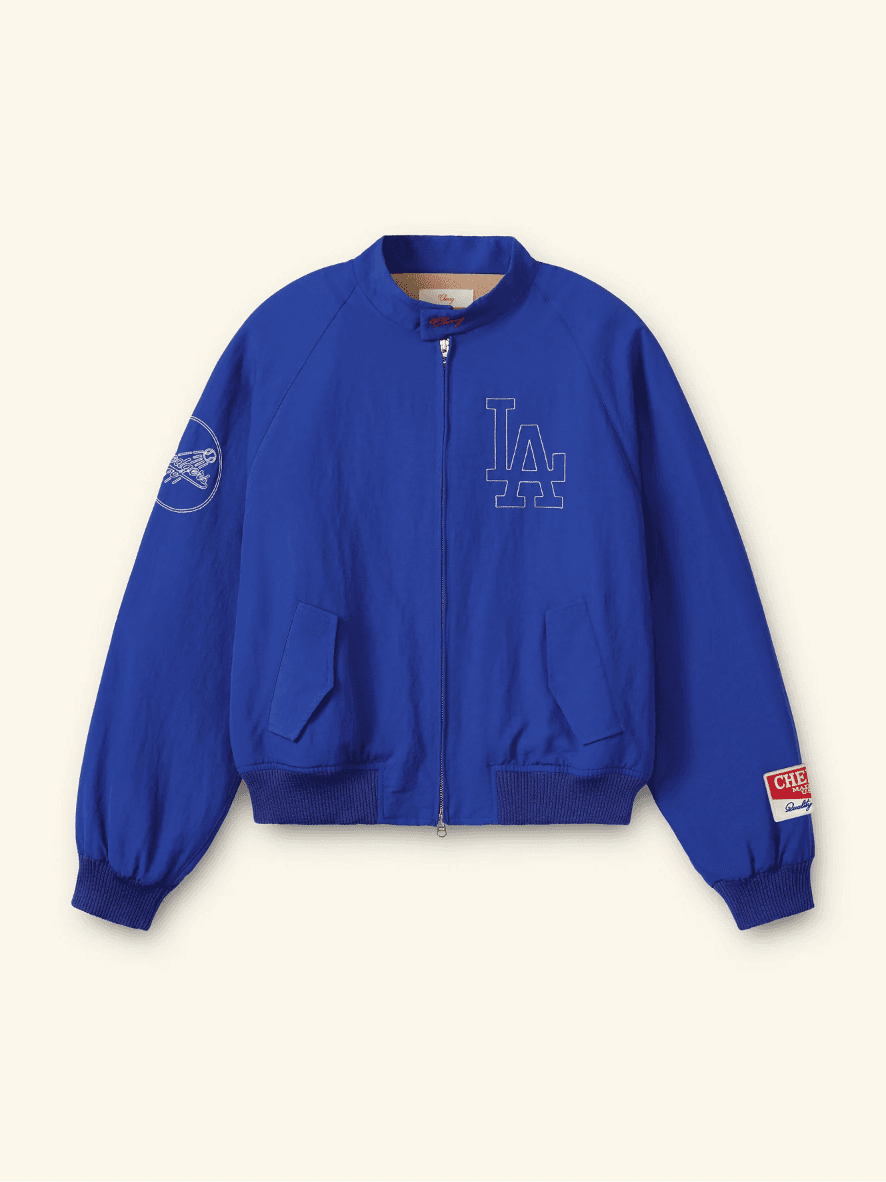
The Championship Jacket shows why the technical work matters. Its source photography visibly combines a short, broad outerwear proportion with a zip front, rib components, front flap pockets, a chest mark, sleeve patching, and a small cuff identifier. Any one of those features looks simple in isolation. Together they demand decisions across pattern, pocket shape, zipper selection, rib specification, patch execution, label attachment, and final pressing. You cannot reverse-engineer those decisions from a generic merch template once the production timeline is moving.
How do you build a price ladder for a limited apparel drop?
Build a limited-drop price ladder by giving each price band a different job. The entry item earns a first purchase. The core item earns repeat wear. The middle tier earns emotional attachment. The hero item creates the collection’s gravity. Price has to reflect product role and perceived value, not only cost-plus math.
In the live Mid Summer Classics assortment, the Championship Jacket is roughly three times the price of the $198 hoodie and a little over eight times the $74 mesh trucker. Those ratios do not reveal margin or unit economics. They do show an intentional distance between the souvenir-level entry item and the premium hero. For a client project, HH uses that distance to ensure the top tier has visible reasons to exist: a distinct silhouette, better material or construction, more complicated development, lower anticipated unit count, or a higher degree of detail.
A flat price ladder makes every product compete for the same purchase. A well-designed ladder lets customers choose their level of commitment. It also makes the collection easier to merchandise across ecommerce, events, retail fixtures, PR seeding, and employee or ambassador allocation. The big idea becomes easier to enter without becoming cheaper in the market’s eyes.
Product has to extend into retail, partnerships, and the real world
The strongest capsule does not stop at the product page. Cherry LA’s retail and partnership history shows an effort to carry the brand world into physical experiences. Its first-party site lists the Cherry General Store on Melrose Avenue, while Hypebeast’s coverage of the 2022 opening described a store environment shaped by the same old pickup, Western, baseball, and auto-shop references that appear in the brand’s product world.
ELLE also reported that Cherry LA’s 2025 W Austin collaboration turned a hotel into a multi-day public program with early product access, food and beverage elements, performers, and a Cherry LA-inspired dessert. Highsnobiety’s coverage of the brand’s 15-piece Wrangler collaboration showed the same logic across racing tees, a suede varsity jacket, and cowboy-cut denim. These examples do not prove financial performance. They do show a consistent strategy: cultural reference becomes more credible when the clothing, retail setting, partner, and event all tell the same story.
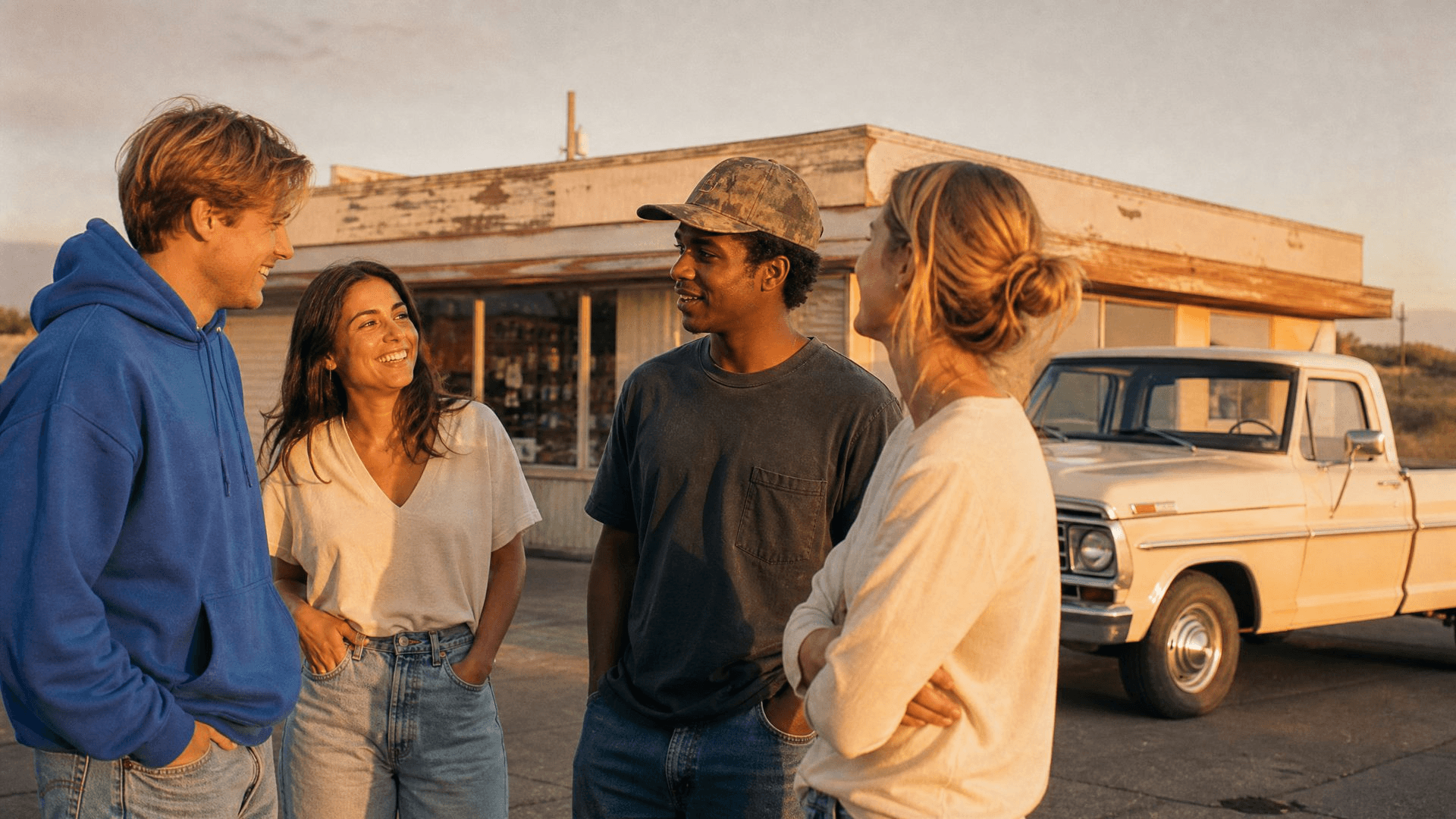
For your own brand, this means merchandising begins before launch. Create the campaign shot list while the sample is still in review. Plan which item drives the landing page, which opens the email, which seeds the community, which belongs in the physical environment, and which tells the strongest story in short-form video. You do not need a hotel takeover to build a world. You need a collection organized tightly enough that every customer touchpoint reinforces it.
What a full-package apparel partner should own
A full-package apparel design and manufacturing partner owns the translation from brand intent to bulk product. That includes strategic discovery, product and assortment planning, design development, technical specification, sourcing coordination, sampling, production management, quality control, packaging, and delivery planning. A vendor who only takes art files and returns a generic garment cannot protect the details that make a premium capsule feel authored.
HH works best when your organization owns the cultural equity but needs an operating partner to turn it into product. That is common for consumer brands, event and hospitality teams, athlete and NIL programs, agencies, creators, sports properties, and growing companies with real apparel demand but no internal apparel developer. Bring the community, occasion, audience, and ambition. We will turn those inputs into a product architecture, a development plan, production-ready specifications, and a collection people want to keep.
If you are planning a city, event, licensed, community, or collaboration capsule, start with the product system. Map the category jobs, find the hero piece, define what has to be true in every fit and trim, and build the approval process before anyone asks for a production quote. That is how a recognizable moment becomes an owned brand asset.
Frequently Asked Questions
How do you make a licensed apparel collection feel like a real brand instead of generic merchandise?
Make the cultural reference one layer of a clear product system. The collection needs its own fit rules, color hierarchy, product ladder, recurring brand details, and a hero piece with visible reasons to exist. A logo earns attention, but product development earns repeat wear and lasting brand value.
What products should be included in a premium city or event merchandise capsule?
Include an access product, an accessory, a core uniform item, a differentiated silhouette, a middle-tier emotional purchase, and a hero product. Headwear, tees, fleece, and outerwear are a proven category sequence when each item has a distinct customer and commercial job. Do not build six versions of the same entry-level shirt.
How do you build a price ladder for a limited apparel drop?
Build from customer commitment rather than only cost. Give a lower-cost accessory the job of access, give a core tee the job of repeat wear, let fleece carry emotional value, and create a hero item that establishes the ceiling. The premium tier needs a distinct silhouette, materials, construction, or detail package that buyers can see and feel.
What needs approval before bulk production of a custom hoodie or jacket?
Approve the fit and grading, material and color standard, decoration and trim sample, final construction details, packaging, and pre-production sample before bulk release. The bulk order should repeat an approved product, not serve as the first full test of the concept. A competent production partner builds each of these decisions into the development calendar.
How do you keep color, fit, branding, and finishing consistent across an apparel collection?
Create a single source of truth that specifies the fit blocks, measurement tolerances, color standards, decoration placement, trims, labels, and finishing requirements for each SKU. Use material and decoration samples to test those specifications before bulk. Consistency does not happen through taste alone, it happens through approved documents and checkpoints.
When should a brand use custom development instead of applying a logo to standard blanks?
Use custom development when the garment’s fit, material, construction, wash, trim, or category role carries the value proposition. Standard blanks work when speed and low complexity matter more than differentiation. The moment the product itself needs to communicate your brand, a custom development process becomes the more disciplined choice.
What does a full-package apparel partner handle for a capsule collection?
A full-package partner coordinates the complete path from strategic concept to delivered product. That includes the product brief, assortment plan, design, technical specifications, sourcing coordination, sample management, bulk production, quality control, and logistics planning. This keeps a brand team focused on the customer, campaign, and community instead of managing a disconnected factory process.