How to Manage Apparel Production Across Multiple Seasons Without Losing Your Mind
This is not a guide about the basics of a T&A calendar. This is a playbook for the sophisticated operator who needs to professionalize their production planning to support a multi-season, multi-million-dollar business.
How to Manage Apparel Production Across Multiple Seasons Without Losing Your Mind
3 MINUTES
March 23, 2026
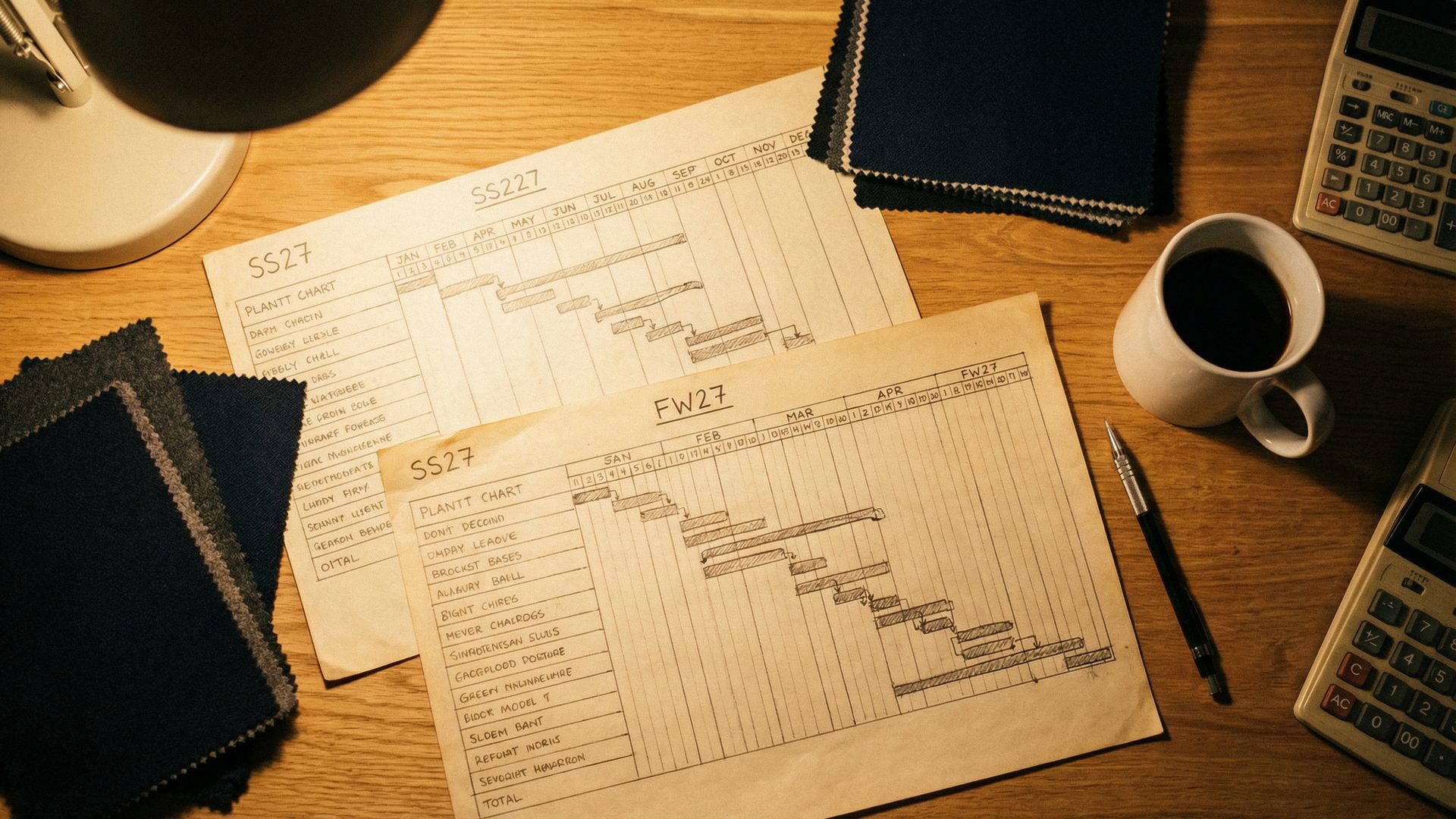
This is the moment the chaos begins. Your Spring/Summer collection is deep in bulk production, but the TOP samples for three of your five styles are stuck in a customs backlog. Your primary factory is emailing you about a fabric flaw they just discovered on the cutting table. Simultaneously, your design team is finalizing the tech packs for Fall/Winter, and the first proto samples are due in two weeks. Your cash is tied up in SS deposits and FW development costs, and you are staring at two separate Time & Action (T&A) calendars that are already bleeding into each other.
Welcome to the operational reality of a scaling apparel brand. The transition from managing a single, linear production calendar to running two or more seasons in parallel is the single greatest stress test a brand operator will face. It is where spreadsheets break, communication fails, and margin evaporates. Most brands at this stage—even those doing well over $250,000 in annual spend—are in a constant state of reactive firefighting. They are managing by instinct, not by system.
This is not a guide about the basics of a T&A calendar. This is a playbook for the sophisticated operator who needs to professionalize their production planning to support a multi-season, multi-million-dollar business. We will cover the frameworks that separate amateur operations from professional ones, focusing on the three pillars of multi-season management: The Dual T&A System, Proactive Capacity Management, and Strategic Financial Guardrails.
The Core Problem: Why Multi-Season Management Breaks Brands
Running two seasons at once is not just twice the work; it is an exponential increase in complexity. The core challenge is that you are managing two fundamentally different production stages simultaneously, and they are competing for the same finite resources: time, factory capacity, and cash.
At any given moment, your operation is split:
Production Stage | Spring/Summer (SS) | Fall/Winter (FW) |
Q1 (Jan-Mar) | Bulk Production & QC | Proto & Fit Sampling |
Q2 (Apr-Jun) | Inbound Logistics & Fulfillment | Golden Sample & Bulk Deposit |
Q3 (Jul-Sep) | In-Season Selling & Re-orders | Bulk Production & QC |
Q4 (Oct-Dec) | End-of-Season Sale & Analysis | Inbound Logistics & Fulfillment |
This overlap creates three primary points of failure:
Resource Contention: Your best fit technician is needed to approve an SS TOP sample and review an FW proto sample in the same week. Your primary factory needs to shift a production line from your SS bulk run to start on FW samples, causing a delay in one or the other.
Decision Paralysis: A late design change on an FW style seems minor, but it requires a new lab dip, pushing back the sample approval and creating a direct conflict with a scheduled SS QC inspection. Without a clear governance model, teams are paralyzed, waiting for a decision.
Cash Flow Strain: You are paying the final 70% for SS bulk production at the same time you are placing the 30% deposit for FW bulk. A single delay in SS sell-through can jeopardize your ability to fund the next season's production.
Solving this requires moving from a simple T&A to a dynamic, integrated production management system.
The Dual T&A System: Running Parallel Timelines
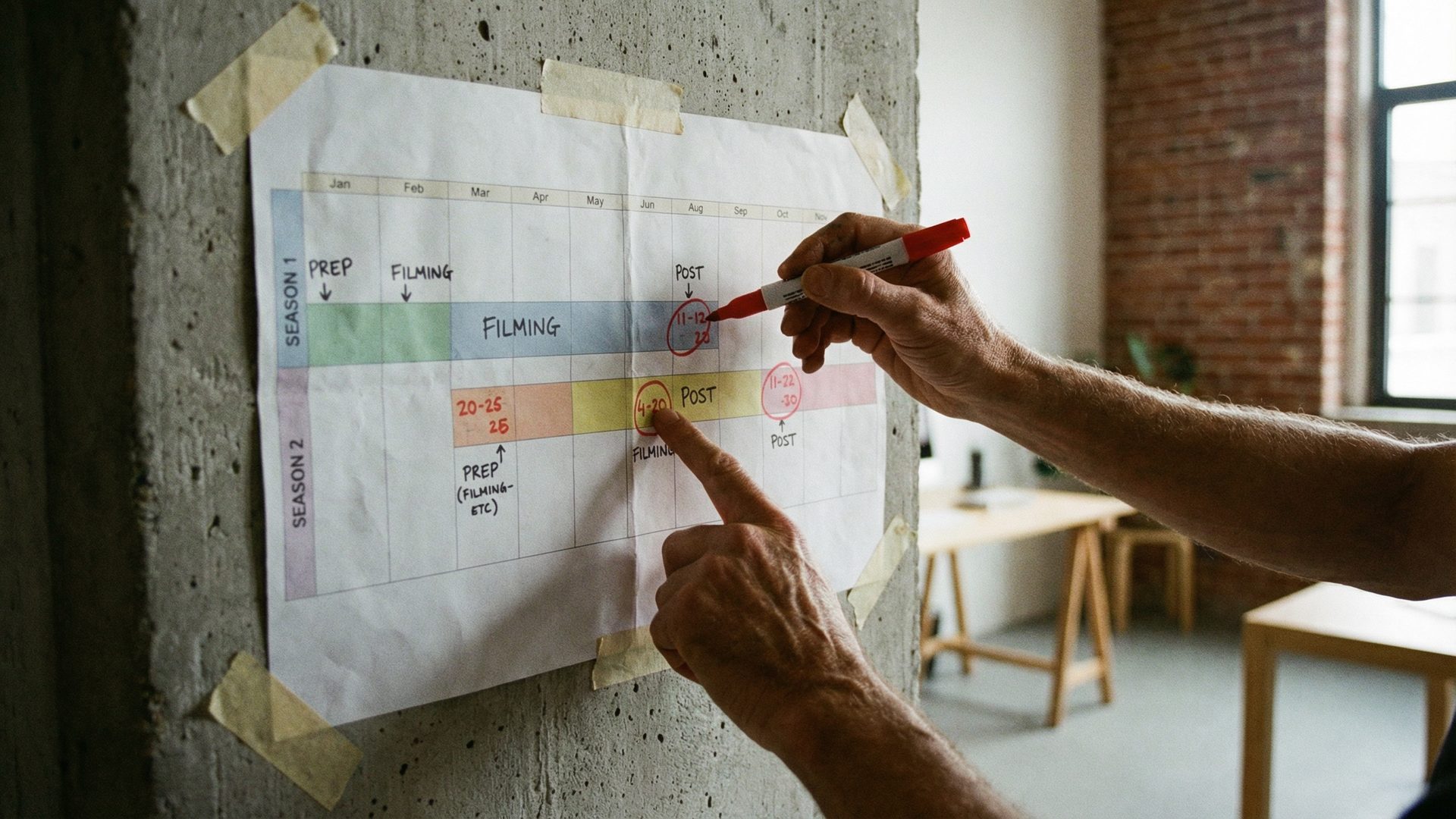
A single T&A (Timeline & Action) calendar is a flat line. A dual T&A system is a three-dimensional map. It tracks both seasons simultaneously and, crucially, identifies the specific points where they intersect and compete. This is not just two spreadsheets; it is a single, unified view of your entire production pipeline.
Building the Master Calendar
The master calendar works backward from two fixed points: the In-DC (In-Distribution Center) Date for each season. Every other milestone is subordinate to these dates. A professional multi-season calendar includes not just the core production stages, but also the critical governance and financial gates.
Key additions for a multi-season T&A:
• Design Lock Dates: Hard deadlines for when a design is frozen. A change after this date requires executive approval and a documented margin impact assessment.
• Capacity Reservation Dates: Deadlines for confirming volume with your factory partners to secure production line space.
• Fabric Liability Dates: The point at which you are financially committed to raw materials, even if the PO is not yet placed.
• Financial Gates: Dates for placing deposits, making final payments, and projected cash flow impacts.
Critical Path Management Across Seasons
The critical path is the sequence of dependent tasks that determines the total duration of a project. In a multi-season environment, you have two critical paths running at once. The real challenge is managing the cross-seasonal dependencies—the moments where a task on the FW path directly impacts a task on the SS path.
For example, a two-week delay in FW proto sampling does not just delay the FW timeline. It consumes two weeks of your technical designer's time that was allocated for reviewing SS TOP samples, potentially delaying the approval of your main season's production. A sophisticated operator identifies these shared resources—key personnel, specific machinery, QC teams—and treats their time as the most critical resource to manage.
Your T&A must flag these shared resources and build in buffers. If your lead technical designer is the only person who can approve a fit, their time must be scheduled with the same rigor as a factory production line.
Proactive Capacity Management: Beyond Placing POs
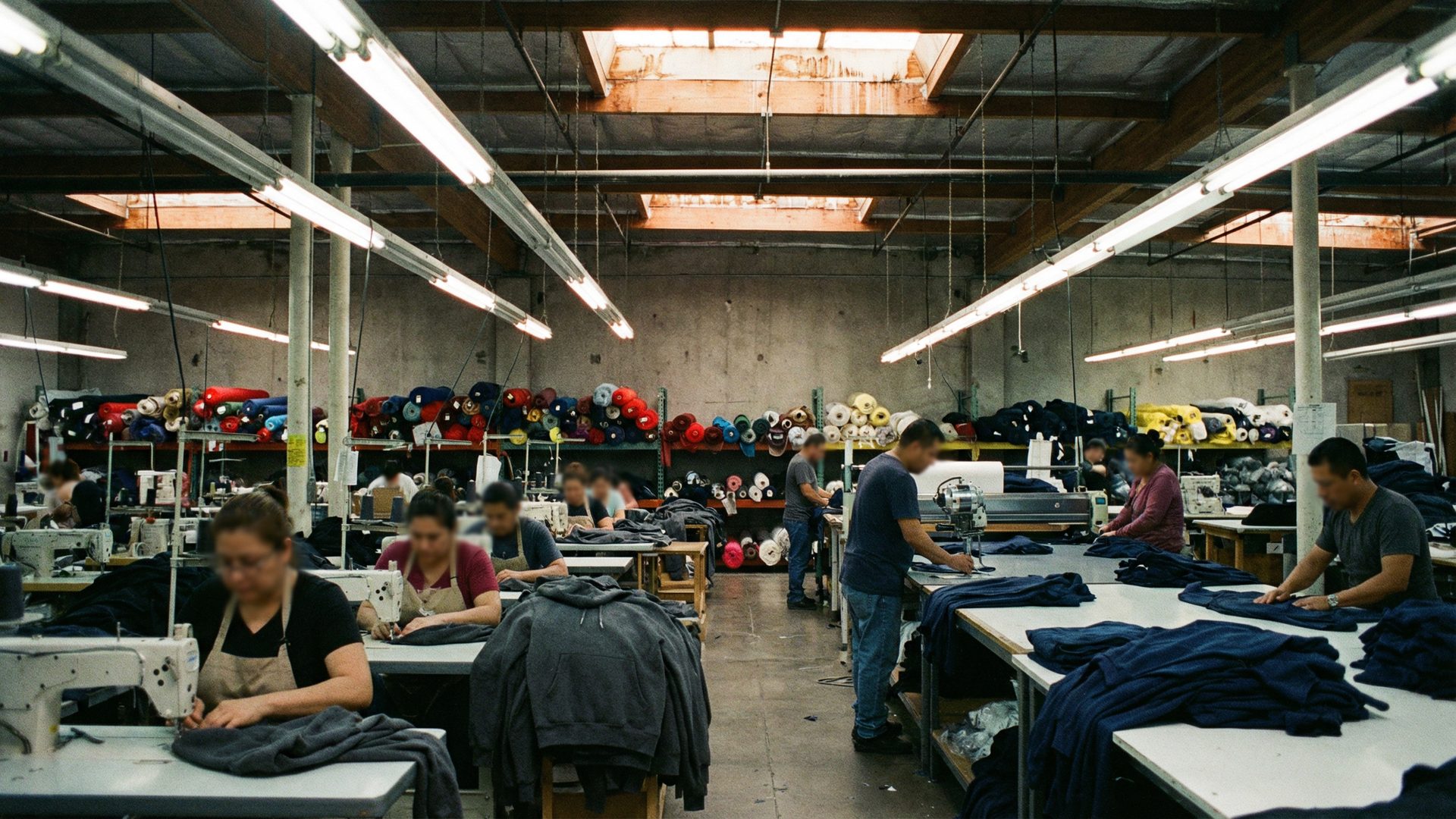
At the $250k+ level, you are no longer just a customer to your factory; you are a significant part of their business. This means you must move from reactively placing POs to proactively managing your share of their capacity.
Capacity Reservation & Staged POs
If you are not formally reserving production capacity 6-9 months in advance, you are gambling. A Capacity Reservation Agreement is a contract with your supplier that secures a set amount of production volume for a specific period. It is your insurance policy against being told the factory is full when you are ready to place your bulk PO.
This is often paired with a staggered PO strategy. Instead of placing one massive PO for the entire season, you break it into multiple, smaller POs. This allows you to:
Reduce Fabric Liability: Commit to your core, high-volume styles first, then place subsequent POs for more trend-driven pieces after you have early sell-through data.
Improve Forecast Accuracy: Use early reads from the first drop to adjust the quantities on the second and third drops, reducing the risk of over- or under-buying.
Smooth Cash Flow: Staggering your POs also staggers your payment obligations, turning a single massive cash outlay into a series of more manageable payments.
This strategy requires a deep partnership with your manufacturer. They need visibility into your full seasonal forecast to plan their own raw material and labor needs, even if you are only placing the POs in stages.
Strategic Financial Guardrails: Protecting Your Margin
Running two seasons in parallel is a cash-intensive operation. Without strict financial controls, it is easy to let your margin get eroded by a thousand small cuts.
The Landed Cost Model
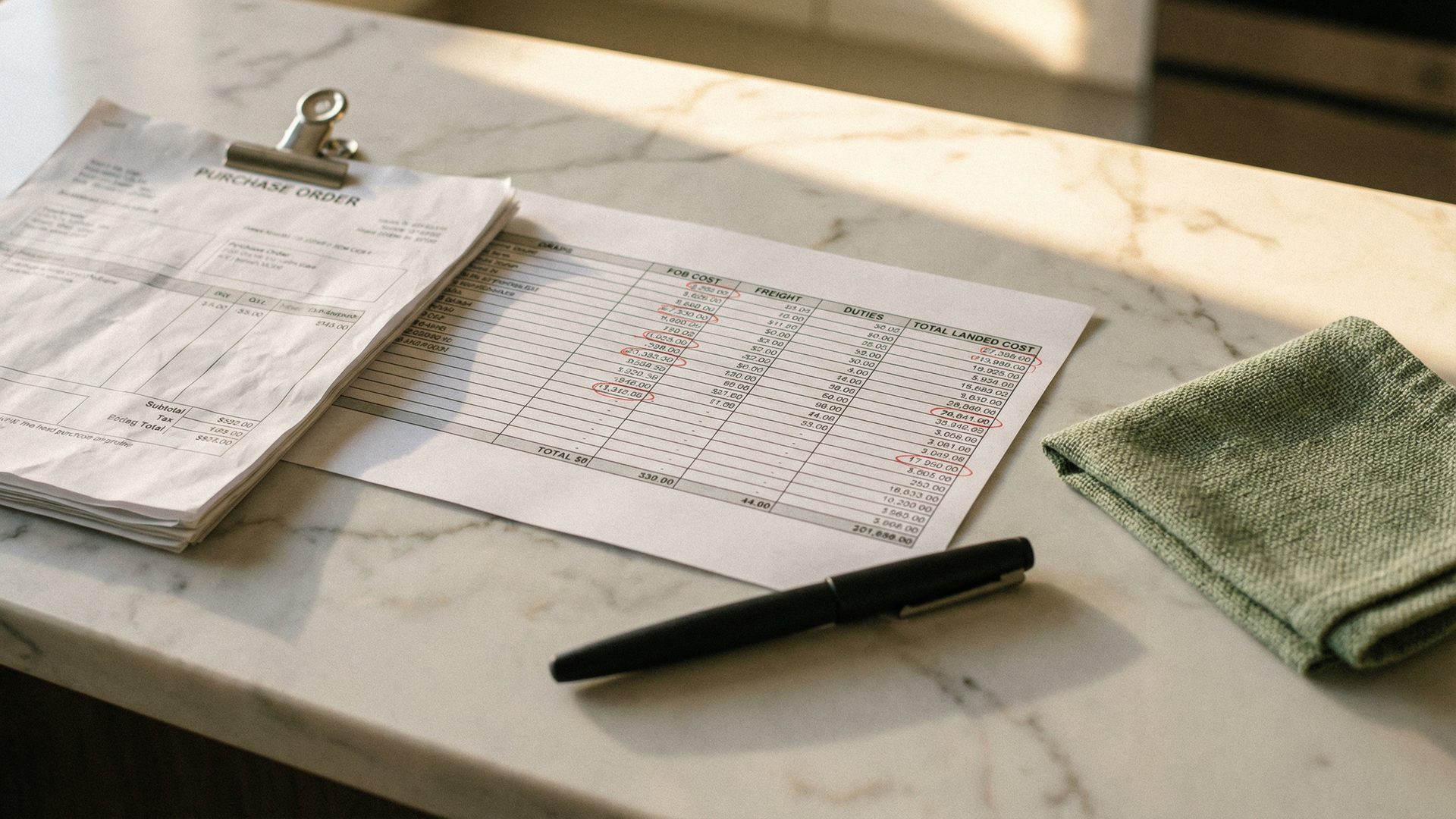
Your financial model must be built around landed cost, not just FOB price. For every style, you must have a clear view of the true cost to get it into your distribution center. This includes:
• FOB (Free on Board) Cost: The price you pay the factory.
• Freight: Sea or air shipping costs.
• Duties & Tariffs: Taxes imposed by the importing country.
• Customs Brokerage: Fees for clearing your goods through customs.
• Inland Drayage & Warehousing: The cost to get the goods from the port to your DC.
When you are managing two seasons, you must be modeling the landed cost for both simultaneously to understand your true cash position. A 10% increase in freight costs for your SS collection can have a direct impact on your ability to fund your FW deposits.
The Governance of Change
In a multi-season environment, the single biggest destroyer of margin is the late-stage design change. A seemingly simple request to change a trim color on an FW style after the Bill of Materials (BOM) has been finalized can trigger a cascade of costs: new lab dips, a potential change in minimums, and the administrative overhead of updating the tech pack and communicating the change to a factory that is already in the middle of your SS production.
This is where a formal governance model becomes non-negotiable. This is a simple but powerful system that defines who can make what changes, at what stage, and what the documented financial consequence will be. For example:
• Pre-Proto Sample: Design team has full creative freedom.
• Post-Proto, Pre-Fit Sample: Changes require approval from the Head of Product. Margin impact must be noted.
• Post-Fit, Pre-Golden Sample: Changes require approval from the CEO/Founder. A formal cost-benefit analysis is required.
• Post-Golden Sample: No changes are permitted except for critical quality failures.
This is not about stifling creativity. It is about instilling discipline and making the true cost of a change visible to the entire organization.
The Full-Package Advantage: Internalizing the Complexity
Managing this level of operational complexity is a full-time job. For many brands at this stage, it is the point where the founder gets pulled from their core strengths—brand, marketing, and community—and becomes a full-time production manager. This is the moment to consider a full-package manufacturing partner.
A true full-package partner does not just execute your tech packs. They internalize the entire multi-season management process. They manage the dual T&A calendars, they secure the factory capacity, they handle the raw material liability, and they provide the operational expertise to keep both seasons running smoothly. This allows you to operate with the sophistication of a much larger organization without having to build a massive in-house production team.
By offloading the operational complexity, you are free to focus on the high-leverage activities that actually grow the brand. You are no longer losing your mind managing the chaos; you are directing a professional orchestra.
Frequently Asked Questions (FAQ)
1. How do I negotiate capacity reservation without committing to a massive, binding PO?
This is about partnership and forecasting. Provide your factory with a detailed, non-binding seasonal forecast as early as possible. Then, negotiate a reservation based on a percentage of that forecast (e.g., 80%), with a smaller, binding PO for your core, never-out-of-stock styles. The factory gets the visibility they need, and you get the flexibility you need.
2. What is a realistic buffer to build into a dual-season T&A?
Standard practice is to add a 10-15% buffer to all key lead times. For a multi-season calendar, add an additional 1-2 week "buffer" at the points where the two seasons overlap and share a critical resource, such as final sample approvals or QC inspections.
3. At what point does it make sense to hire an in-house production manager vs. using a full-package partner?
The rule of thumb is when the fully-loaded cost of an experienced, US-based production manager (salary, benefits, overhead) is less than the premium you are paying for full-package services. For most brands, this tipping point is well into the eight-figure revenue range. Below that, the expertise and leverage of a good full-package partner almost always provides a higher ROI.
4. How do I manage cash flow when I have two seasons of deposits and payments active at once?
This requires a rolling 6-month cash flow forecast, updated weekly. You need to model your projected revenue from the current season against the payment obligations for both the current and next season. Many brands at this stage secure a revolving line of credit from their bank to bridge the gap between paying for production and receiving revenue from sales.
5. My factory says they are too busy to provide a detailed T&A. What should I do?
This is a major red flag. A professional factory operates on a T&A. If they cannot provide one, it is a sign that they are disorganized and that your order is likely to be delayed. It is a difficult conversation, but you must insist on a shared, transparent calendar as a condition of doing business. If they refuse, it is time to start looking for a new partner.