The Scaling Playbook: How to Switch Apparel Manufacturers Without Disrupting Your Business
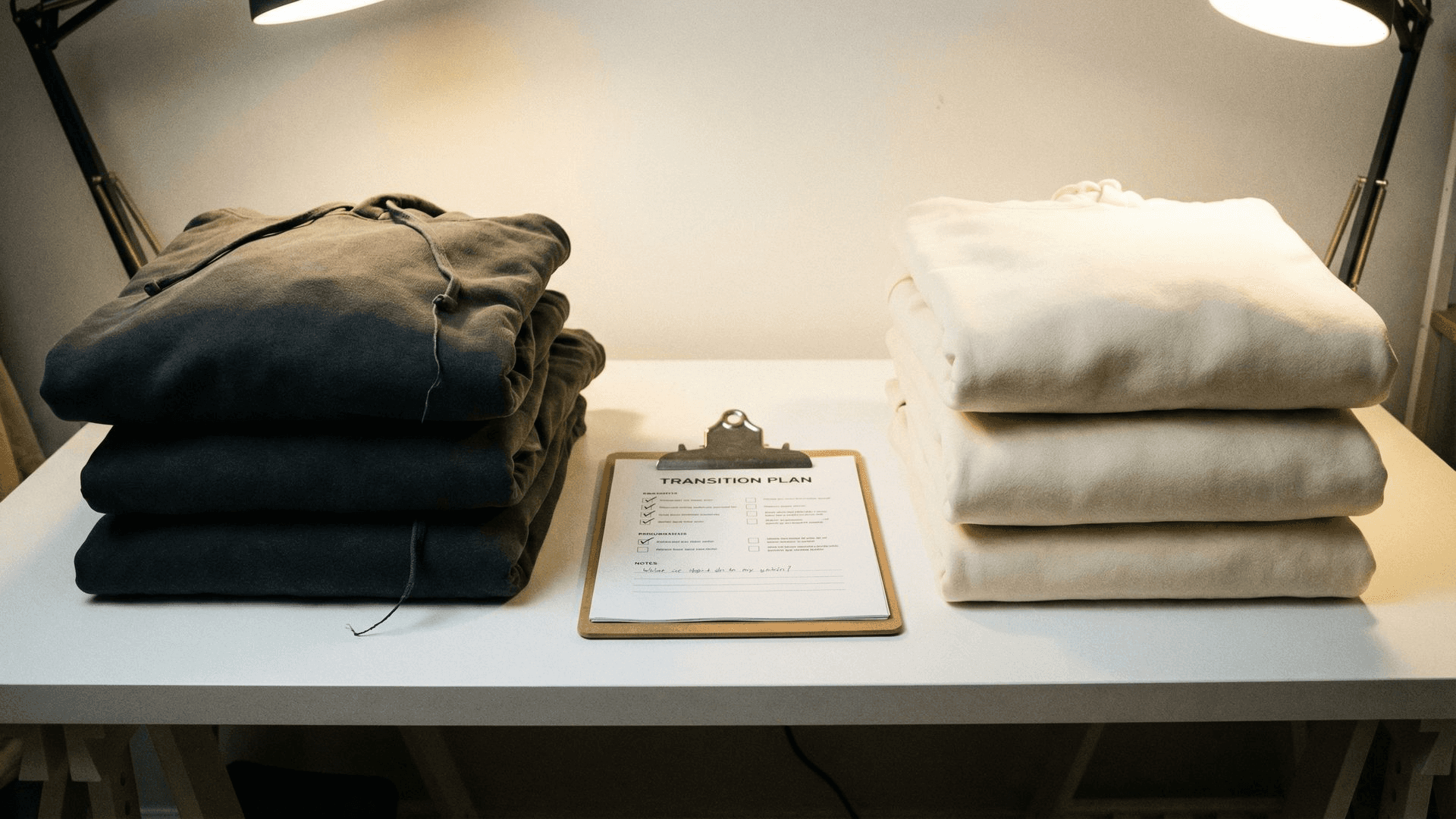
The Scaling Playbook: How to Switch Apparel Manufacturers Without Disrupting Your Business
3 MINUTES
February 26, 2026
It is a problem that signals success, but it is a problem nonetheless. Your brand has grown beyond the capabilities of your first manufacturing partner. The factory that was perfect for your first 500-unit runs is now struggling to keep up with 5,000-unit orders. Quality is slipping, communication is breaking down, and delivery dates are becoming suggestions rather than deadlines. You know you need to make a change, but the prospect of switching manufacturers feels like changing the engine on a moving car. How do you execute a complex transition without disrupting production, alienating your customers, or damaging the brand equity you have worked so hard to build?
The fear of disruption is valid. A poorly managed transition can lead to stockouts, quality control disasters, and significant financial losses. But staying with the wrong partner carries its own set of compounding costs. The key is not to avoid the change, but to manage it systematically. This playbook provides a step-by-step operational guide for established brands on how to execute a seamless manufacturing transition, ensuring your supply chain scales as effectively as your brand. We will cover the financial and operational risks of staying with a legacy partner, the detailed mechanics of a phased transition, and the strategic framework for choosing a new partner that can support your brand for the next decade of growth.
The Hidden Costs of Staying with the Wrong Partner
Before diving into the “how,” it is critical to understand the “why.” The pain of a strained manufacturing relationship is not just about late shipments or inconsistent stitching. The true costs are often hidden within your operating expenses and opportunity costs, quietly eroding your margins and brand health.
These costs manifest in several ways. First, there are the direct costs of poor quality: customer returns, discounted deadstock, and the time your team spends on damage control. Second, there are the operational costs: the constant follow-up, the need for third-party quality control, and the expedited air freight required to meet deadlines that were missed weeks ago. Finally, and most significantly, there is the opportunity cost. When your team is consumed with managing a failing supplier, they are not focused on growth, innovation, or building the next great product. The longer you stay, the more you invest in a partnership that is holding your brand back. This is not just a production issue; it is a strategic bottleneck that directly impacts your ability to compete and grow.

The Systematic Approach to a Seamless Transition
A successful transition is not a single event but a phased process. It requires meticulous planning, clear communication, and a deep understanding of your product and operational data. The process can be broken down into three core phases: Data & Documentation Transfer, Quality Standard Alignment, and Inventory Ramp-Down & Ramp-Up.
Phase 1: Data & Documentation Transfer
Your product specifications are the lifeblood of your brand. Before you can move production, you must ensure that all of this critical information is extracted from your current partner and organized into a clear, transferable format. This includes detailed tech packs for every SKU, graded size specifications, fabric and trim standards, and a complete history of production notes and revisions. Assume your new partner knows nothing. Your documentation must be comprehensive enough for a brand-new factory to replicate your product perfectly without any prior context. This is the foundation of a successful transition. This data package should be treated as a core business asset, as valuable as your brand name or customer list. It is the blueprint of your physical product, and its completeness will determine the success or failure of your transition.
Phase 2: Quality Standard Alignment
Once your documentation is in order, the next step is to align your new partner on your quality standards. This goes beyond sending them a perfect sample. It involves providing a range of approved production samples, including acceptable variations in color, hand-feel, and construction. It also means providing examples of unacceptable products, with clear notes on why they failed your quality control. The goal is to create a shared, objective understanding of what “good” looks like, leaving no room for subjective interpretation. This is also the stage where you introduce your new partner to your quality control protocol, including inline inspection points, mid-production checks, and final audit procedures. The goal is to create a system of accountability that is built on objective data, not subjective assessments.
Phase 3: Inventory Ramp-Down & Ramp-Up
This is the most delicate phase of the transition. The goal is to strategically ramp down production with your old partner while simultaneously ramping up with your new one, all without creating a gap in inventory that leads to stockouts. This requires careful sales forecasting and inventory planning. Start by placing a small initial order with your new partner to validate their capabilities. As you gain confidence, gradually increase their order volume while decreasing the volume with your old partner. Maintain open communication with both parties throughout this process. A well-managed inventory bridge is the final piece of a non-disruptive transition. This requires a level of forecasting and planning that may be new to your organization, but it is a critical capability for any brand operating at scale.

The Playbook in Action: A 12-Week Transition Timeline
To make this process more concrete, here is a week-by-week breakdown of a typical 12-week manufacturing transition. This timeline is a template; your specific needs may require adjustments, but the core sequence and principles remain the same.
Weeks 1-2: Partner Vetting and Onboarding
Your focus this period is on selecting and formally engaging your new manufacturing partner. This involves more than just comparing price quotes. You should be conducting deep diligence on their capabilities, quality systems, and communication protocols. Request and review samples of their work, speak with their current clients, and ensure there is strong cultural alignment. Once you have made your selection, execute a formal manufacturing services agreement that clearly outlines expectations, ownership of intellectual property, and quality standards.
Weeks 3-6: Technical Onboarding and Sample Development
This is where the knowledge transfer happens. Your team will work closely with the new partner to walk them through your complete data package. The goal is to produce a perfect first sample. Expect two to three rounds of revisions as your new partner learns the nuances of your product. This is a critical phase for building a shared understanding of your brand’s standards. Do not rush it. A few extra weeks here can save months of headaches down the line.
Weeks 7-10: Initial Production Run and Quality Validation
With an approved sample in hand, it is time for the first small-scale production run, typically 10-20% of your standard order volume. Your team or a trusted third party should be on-site for inline inspections to catch any deviations from the approved standard early. This run serves as the final validation of your new partner’s ability to execute at scale. It is also when you will begin to ramp down production with your old partner, placing your final, smaller purchase orders with them.
Weeks 11-12: Full-Scale Ramp-Up and Final Offboarding
Once the initial production run has been successfully delivered and passed final quality control, you can confidently issue your first full-scale purchase order to your new partner. At the same time, you will complete your final production run with your old partner and formally offboard them, ensuring all final payments are made and all proprietary materials are returned. Your inventory bridge is now complete. You have successfully transitioned to a new manufacturing partner without a single day of stockouts.

Choosing the Right Partner, Not Just the Right Factory
The most critical decision in this process is not which factory to choose, but which partner to work with. A factory simply executes on a tech pack. A true manufacturing partner invests in your brand, understands your long-term goals, and provides strategic guidance that goes beyond production. They act as an extension of your internal team, managing the entire supply chain from design and development to quality control and logistics.
For a scaling brand, a full-package partner is not a luxury; it is a necessity. They provide the operational infrastructure that allows you to focus on what you do best: building your brand and connecting with your customers. They de-risk the transition process by taking ownership of the outcome, ensuring that your quality, delivery, and brand standards are maintained without interruption. This allows your team to stay focused on the strategic work of brand building, marketing, and customer engagement, rather than being pulled into the tactical weeds of production management.
Mid-Article CTA: Ready to scale your production without the operational headaches? Download our free Scaling Playbook to learn how a full-package partnership can transform your supply chain.
Conclusion: From Transaction to Partnership
Switching apparel manufacturers is a defining moment in a brand’s lifecycle. It marks the transition from a series of transactional relationships to a strategic partnership. While the process can feel daunting, a systematic, data-driven approach removes the risk and uncertainty, allowing you to scale your production as confidently as you have scaled your brand. By focusing on partnership over production, you are not just finding a new factory; you are building a supply chain foundation that will support your growth for years to come. The right partner does not just make your product; they make your business better, and your life, better.
FAQ: Switching Apparel Manufacturers
How long does it take to switch apparel manufacturers?
A well-planned transition typically takes four to six months. This includes 1-2 months for partner selection and onboarding, 2-3 months for sample development and quality alignment, and 1-2 months for the initial production run and inventory ramp-up.
What are the biggest risks when switching manufacturers?
The primary risks are quality degradation, production delays, and inventory stockouts. These can be mitigated through a phased approach, meticulous documentation, and clear communication with both your old and new partners.
How do I protect my intellectual property during the transition?
Ensure you have clear ownership of all your tech packs, patterns, and design files. Before disengaging with your current manufacturer, confirm that all proprietary materials have been returned or deleted. When onboarding a new partner, use clear contractual agreements that define ownership of all design and development work.
Should I use a sourcing agent or work directly with a factory?
While sourcing agents can help you find factories, they do not typically manage the entire production process. For a scaling brand, a full-package manufacturing partner is often a better choice, as they provide end-to-end operational management, including quality control and logistics, which is critical for a seamless transition.
What is the first step I should take?
The very first step is to conduct a thorough audit of your current production process and document everything. Create a comprehensive data package that includes all tech packs, material specs, and quality standards. This documentation is the single most important asset in your transition.