The Enterprise Apparel Sourcing Matrix: How Brands Manage $5M+ Supply Chains in 2026
The sourcing model that got you here is not the sourcing model that gets you to the next level. This is the guide for the brands that have crossed that threshold, or are about to.

The Enterprise Apparel Sourcing Matrix: How Brands Manage $5M+ Supply Chains in 2026
3 MINUTES
July 20, 2026
There is a version of apparel sourcing that works fine at $500,000 a year. You find a factory, you build a relationship, you run your seasonal programs, and the machine hums. Then your volume crosses a threshold, and everything that worked before starts to crack. Lead times that were acceptable become existential. A factory that could handle your programs at 50,000 units a year cannot handle 500,000. A QC process that caught defects at the end of a run is now catching them after you have already shipped to 400 retail doors. The sourcing model that got you here is not the sourcing model that gets you to the next level.
This is the guide for the brands that have crossed that threshold, or are about to. It is written for the VP of Supply Chain at a $30M outdoor brand, the Director of Sourcing at a merch operator managing 40 creator programs, the COO at a mid-size retailer building a private label program, and the Head of Product at an action sports company that has outgrown its original factory. It is not a beginner's guide to overseas manufacturing. It assumes you already know what a tech pack is, what AQL means, and why you stopped using a sourcing agent. What it covers is the framework that separates brands that manage $5M+ supply chains successfully from those that are perpetually one bad production run away from a crisis.
The data behind this guide is not theoretical. It is drawn from the 2025 USFIA Fashion Industry Benchmarking Study, the BoF-McKinsey State of Fashion 2026 Executive Survey, earnings call transcripts from 30 leading publicly traded US fashion companies analyzed by the University of Delaware's Sheng Lu, and trade data from the OECD. The picture that emerges from all of it is clear: the brands winning in 2026 are not the ones with the cheapest factories. They are the ones with the most resilient, most strategically structured supply chains.
Part 1: The Architecture of a Resilient Supply Chain
The first thing enterprise sourcing directors understand that everyone else does not is that a supply chain is not a vendor list. It is a strategic architecture. Every decision about where you source, how many factories you use, what percentage of volume you allocate to each, and what capabilities you require from each partner is a structural decision with compounding consequences. Get the architecture right and the machine runs. Get it wrong and you are managing fires instead of programs.
Chapter 1: The Multi-Country Imperative
The single most important data point in enterprise apparel sourcing right now is this: in 2025, a record-high percentage of US fashion brands reported sourcing from 10 or more countries, according to the USFIA Fashion Industry Benchmarking Study. That number has never been higher. And nearly 60% of respondents said they plan to source from even more countries in 2026. This is not a trend. It is a structural shift in how serious brands think about supply chain risk.
The reason is straightforward. The brands that concentrated their sourcing in a single country, or a single region, spent the last several years watching that strategy punish them. Tariff regimes changed overnight. Shipping routes through the Red Sea became unreliable. Political instability disrupted production schedules. The brands that had built multi-country sourcing architectures absorbed those shocks. The brands that had not scrambled to rebuild their supply chains in real time, a process that Abercrombie & Fitch, Oxford Industries, and others noted in their 2026 earnings calls takes 12 to 18 months minimum.

The practical implication for a brand managing $5M+ in annual apparel spend is that your sourcing architecture should have at minimum three tiers: a primary production hub for your core volume programs, a secondary hub for diversification and risk mitigation, and a near-shore or domestic option for speed-to-market on chase orders and trend-reactive styles. Each tier serves a different function. Conflating them, or trying to make one factory serve all three, is one of the most common and most costly mistakes in enterprise sourcing.
Chapter 2: The China Plus One Reality Check
The "China Plus One" strategy has been discussed in apparel sourcing circles for years, but in 2026 it has moved from a strategic concept to an operational reality for the majority of major US brands. Oxford Industries reduced its China sourcing from approximately 40% of total product purchases to approximately 15% in a single fiscal year. Abercrombie & Fitch now sources from 16 different countries. Multiple large US fashion companies have stated publicly that they are targeting China sourcing in the "low single digits" as a percentage of total volume by the end of 2026.
The driver is not ideology. It is math. China's average hourly labor costs increased 38% between 2010 and 2021, according to BoF and McKinsey, and the trajectory has not reversed. Asia-to-US shipping costs spiked 165% in a two-month window in early 2024 due to Red Sea disruptions. And the tariff environment, with 76% of fashion executives telling McKinsey they believe higher levies will shape 2026, has made China-heavy sourcing a margin liability that boards are no longer willing to accept.
The critical nuance that most China Plus One discussions miss is that "Plus One" does not mean "replace China." It means restructure your allocation. The brands executing this well are keeping China for the categories where it genuinely leads, complex technical fabrics, certain knit constructions, rapid sampling, and moving their cut-and-sew volume to Bangladesh, Vietnam, and India, where labor costs, factory capabilities, and trade relationships have matured to the point where the quality gap has effectively closed.
Chapter 3: Bangladesh as the Primary Production Hub
Bangladesh is not an emerging market for apparel manufacturing. It is the world's second-largest apparel exporter, generating upward of $45 billion in annual export value and accounting for over 84% of the country's total export earnings. It employs 4.4 million workers. It hosts more LEED-certified green factories than any other country in the world. And in the first five months of 2026, it retained its position as the second-largest apparel supplier to the United States, with $7.34 billion in exports in 2024 alone.
The brands that understand this are not treating Bangladesh as a backup to China. They are treating it as their primary production hub. Major apparel conglomerates announced Phase 2 Bangladesh facility expansions in 2026. Leading denim and workwear brands identified Bangladesh as their largest country of origin. The US-Bangladesh trade agreement reached in 2026 created a framework for tariff exemptions on certain textile and apparel imports, with rates ranging from 0% to 19% depending on US-grown cotton content, a provision that multiple publicly traded apparel companies specifically called out in earnings calls as a material factor in their sourcing strategy.
For a brand managing $5M+ in annual apparel spend, the Bangladesh value proposition is specific and quantifiable. Average labor costs run $95 to $110 per month. Direct shipping routes to Europe run 16 to 21 days. The country's RMG sector saw 30% export growth in April 2026 alone. And the sector is actively moving up the value chain, investing in automation, technical textiles, synthetic performance fabrics, and complex outerwear construction, which means the capability set that was once limited to basic cotton knits now extends to the full range of product categories that mid-to-large brands actually need.
Part 2: Capacity Planning at Scale
Capacity planning is where enterprise sourcing separates from everything that came before it. At $500,000 in annual spend, you are managing programs. At $5M+, you are managing a production calendar, and the difference is not just quantitative. It is structural. A production calendar at scale requires you to think about factory capacity as a finite resource that must be allocated strategically, not a commodity that you access on demand.
Chapter 4: The Capacity Allocation Framework
The first principle of capacity planning at scale is that you do not buy capacity. You reserve it. The factories that can handle enterprise volume, the ones running two million units a month or more, are not waiting for your purchase orders. They are managing complex, multi-client production calendars, and the brands that get priority placement on those calendars are the ones that have built genuine strategic partnerships, not transactional vendor relationships. McKinsey's State of Fashion 2026 report is explicit on this point: the brands that are winning are the ones that have rethought their approach to manufacturers with an emphasis on long-term strategic partnerships, including joint investments in facility upgrades, capacity commitments, and minimum order requirements.
The practical framework for capacity allocation at enterprise scale looks like this. Your primary production hub should be running your core volume programs, the styles that repeat season over season with predictable demand. These programs should be locked into the factory's production calendar 90 to 120 days in advance, with clear purchase order commitments that give the factory the certainty it needs to allocate raw materials and machine time. Your secondary hub handles your trend-reactive and seasonal programs, the styles with higher demand variability that require more flexibility. And your near-shore or domestic option handles your chase orders, the reorders on styles that outperformed your forecast, where speed to market is worth the premium unit cost.
Chapter 5: The Chase Order Problem
The chase order is one of the most underappreciated challenges in enterprise apparel sourcing. A style breaks out. It sells through in three weeks instead of twelve. You need 50,000 more units and you need them in six weeks, not six months. Your primary factory, which is running at capacity on your core programs, cannot accommodate the order without pushing other clients' programs. Your sourcing agent, if you still have one, is calling factories you have never audited. And the clock is ticking on a revenue opportunity that will not wait.
The brands that solve this problem have built it into their sourcing architecture from the beginning. They maintain a factory relationship specifically for chase orders, one that has the capacity headroom, the raw material inventory, and the production flexibility to turn around a 50,000-unit reorder in six weeks. This is not a factory you use for your core programs. It is a factory you have invested in qualifying, auditing, and building a relationship with specifically for this purpose. The cost of maintaining that relationship, even in seasons when you do not use it, is far lower than the cost of a missed chase order on a breakout style.
The key capability requirement for a chase order factory is not just speed. It is the combination of speed and in-house embellishment. A factory that can cut, sew, screen print, embroider, and wash a garment under one roof can turn a chase order in six weeks. A factory that has to outsource its embellishment to a third-party decorator adds two to three weeks to that timeline minimum, and introduces a quality control variable that you cannot manage from a distance.

Chapter 6: MOQ Strategy at Scale
One of the counterintuitive realities of enterprise sourcing is that low MOQs matter more at scale, not less. The conventional wisdom is that big brands get big MOQs because they are running big programs. That is true for your core volume styles. But enterprise brands run dozens of styles per season, and the ability to test a new style at 300 units before committing to 30,000 is a competitive advantage that compounds over time. The brands that have built this capability into their sourcing architecture can move faster on trend, take more creative risks, and reduce their inventory exposure on new introductions.
The factory capability that enables this is not just a willingness to accept small orders. It is the combination of low MOQs and fast lead times. A factory that will run 300 units but needs 16 weeks to do it is not solving the problem. A factory that can run 300 units in six to eight weeks, with the same quality standards as its high-volume programs, is a genuinely strategic asset. This is rare. Most factories that accept low MOQs do so by deprioritizing small orders in their production calendar, which is why the lead times inflate. The factories that have built their operations to handle both high-volume core programs and low-MOQ test runs simultaneously are the ones worth building long-term relationships with.
Part 3: Quality Control at Enterprise Scale
Quality control is the area where the gap between enterprise sourcing and everything else is most visible, and most consequential. At low volume, a defect rate of 3% is a manageable problem. At 500,000 units, a 3% defect rate is 15,000 defective garments, and the cost of that, in returns, chargebacks, brand damage, and lost wholesale relationships, can exceed the cost of the entire production run.
Chapter 7: The End-of-Line Audit Trap
The most common QC failure mode in enterprise apparel sourcing is not bad factories. It is the end-of-line audit. This is the approach where a third-party inspector arrives at the factory after the production run is complete, pulls a sample according to AQL standards, and approves or rejects the shipment. It is the standard approach. It is also, at enterprise scale, fundamentally inadequate.
The reason is statistical. A single defect found on a finished garment statistically predicts that an average of five to eight more defects exist in the same production run, according to quality control research in the apparel manufacturing sector. By the time an end-of-line audit catches a defect pattern, that pattern has been replicated across thousands of units. The cost of rework or rejection at that stage is orders of magnitude higher than the cost of catching the same defect at the cutting table or the sewing line. End-of-line audits are a lagging indicator. Enterprise QC requires leading indicators.
Chapter 8: In-Line Quality Control as a Competitive Advantage
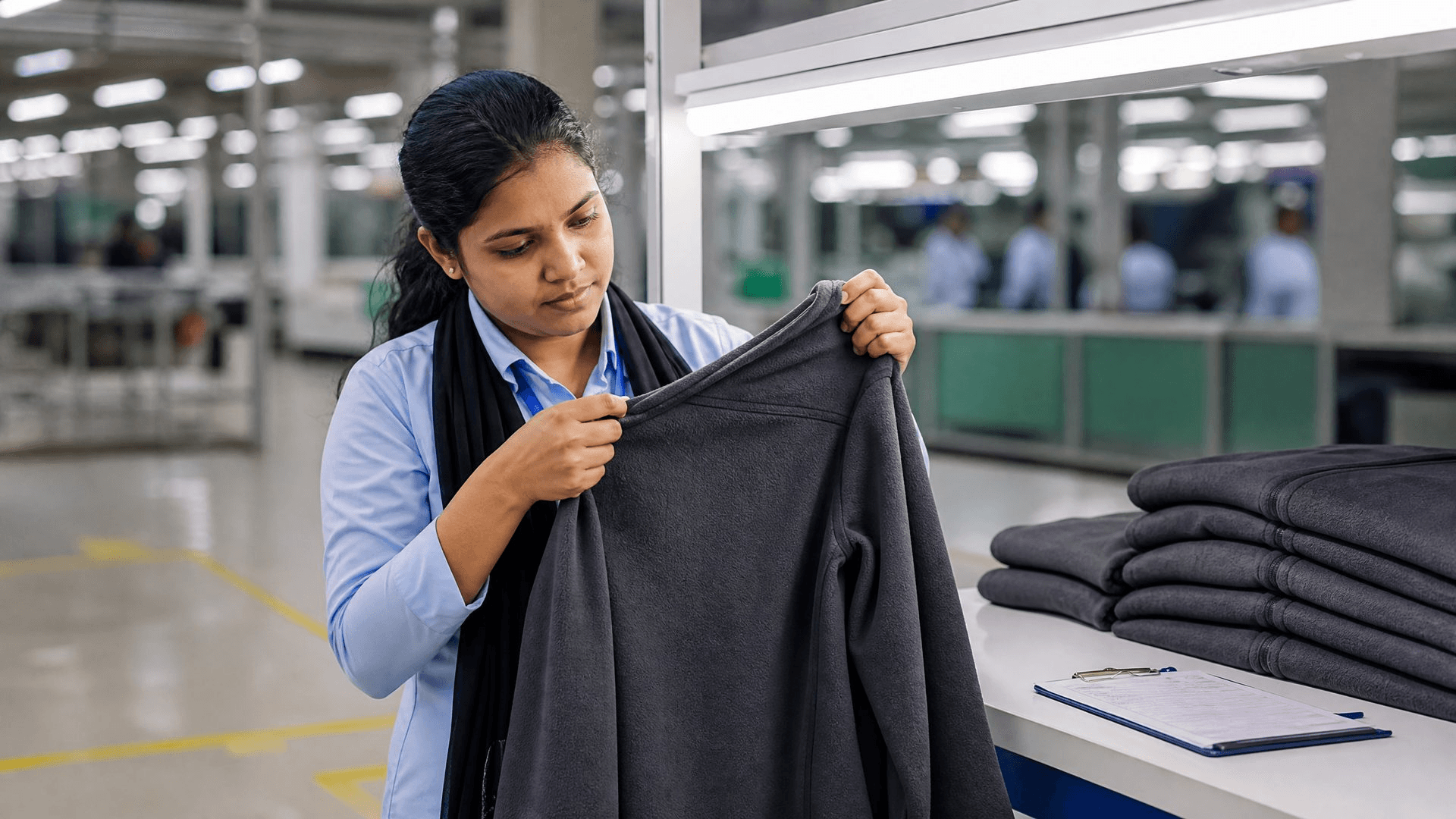
In-line quality control is the practice of inspecting garments at each stage of the production process, not just at the end. It means a QC check at fabric inspection before cutting, a check at the cutting table, a check at the sewing line at regular intervals, a check at the embellishment stage, and a final audit before packing. Manufacturers that have implemented systematic in-line QC programs report defect rate reductions of 35% compared to end-of-line-only approaches.
The operational requirement for in-line QC is a production manager with the authority and the access to stop a production line when a defect pattern is identified. This sounds obvious, but it is not the norm in factories that are running high volume for multiple clients simultaneously. The factories where in-line QC actually works are the ones where the production manager has a direct relationship with the brand, understands the quality standards at a granular level, and has the organizational authority to pull a line without waiting for approval from a client-side sourcing agent who is in a different time zone.
This is one of the most important structural arguments for factory-direct relationships at enterprise scale. When your production is managed through a sourcing agent, the information flow between the factory floor and your team is filtered, delayed, and often incomplete. When your production is managed through a direct relationship with a factory that has a dedicated production manager as your single point of contact, you get real-time visibility into quality issues at the stage where they can still be corrected without destroying your production run.
Chapter 9: The Single Point of Contact Standard
The single point of contact is not a customer service feature. It is a quality control infrastructure. At enterprise scale, the number of handoffs in a production program is the primary predictor of quality failures. Every handoff is an opportunity for information to be lost, misinterpreted, or delayed. A tech pack that passes through a sourcing agent, a factory sales rep, a production planner, a cutting room supervisor, and a sewing line manager before it reaches the floor has been interpreted and reinterpreted five times. The garment that comes out the other end reflects all five of those interpretations.
The standard that enterprise brands should demand from any factory partner is a single named production manager who is responsible for the program from tech pack submission to final audit. That person should be reachable directly, should have the authority to make production decisions without routing through a sales layer, and should be physically present on the factory floor during your production runs. This is not a luxury. It is the minimum viable accountability structure for a production program at scale.
Part 4: The Sourcing Matrix in Practice
The framework described in the preceding sections is not abstract. It maps to a specific set of decisions that enterprise sourcing directors make at the beginning of every season, and it produces a specific set of outcomes that separate the brands that manage $5M+ supply chains successfully from those that do not.
Chapter 10: Building Your Factory Tier Map
The enterprise sourcing matrix is a factory tier map that assigns each of your production partners a specific role in your supply chain architecture. Tier 1 is your primary production hub: high-volume capacity, full in-house embellishment, in-line QC, direct production management, and the ability to run your core programs at scale with consistent quality. Tier 2 is your diversification hub: a secondary country of origin that provides risk mitigation, different trade agreement exposure, and a production relationship that can absorb volume if your Tier 1 partner is disrupted. Tier 3 is your speed-to-market option: near-shore or domestic capacity for chase orders, trend-reactive styles, and programs where lead time matters more than unit cost.
The allocation of volume across these tiers is a strategic decision that should be revisited every season based on your program mix, your forecast confidence, and the current trade environment. A brand that is running 70% of its volume through a single Tier 1 factory is not managing a supply chain. It is managing a dependency. The target allocation for a mature enterprise supply chain is 50 to 60% Tier 1, 30 to 40% Tier 2, and 10 to 20% Tier 3, with the flexibility to shift volume between tiers based on capacity availability and trade conditions.
Chapter 11: The Vertical Integration Advantage
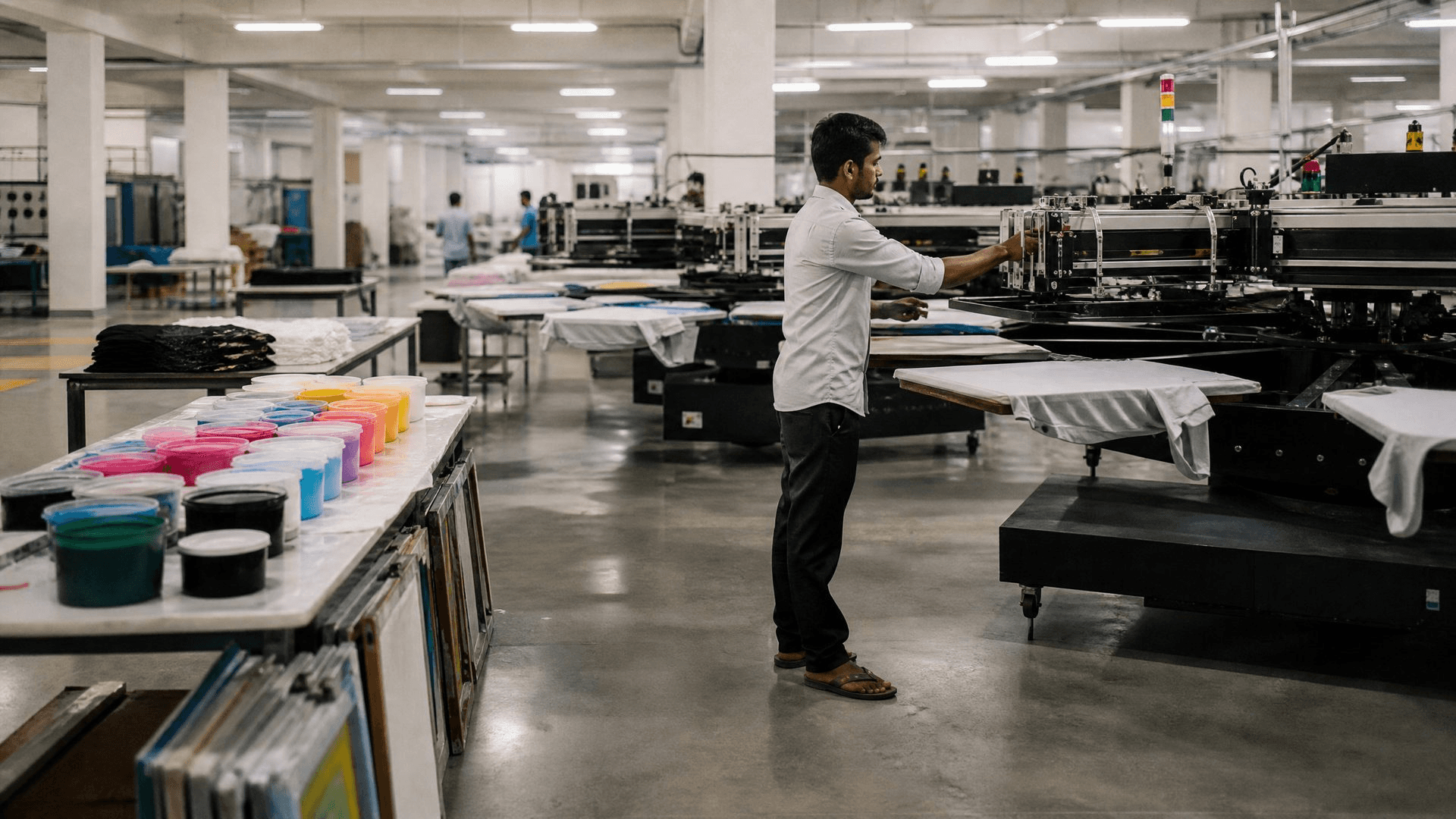
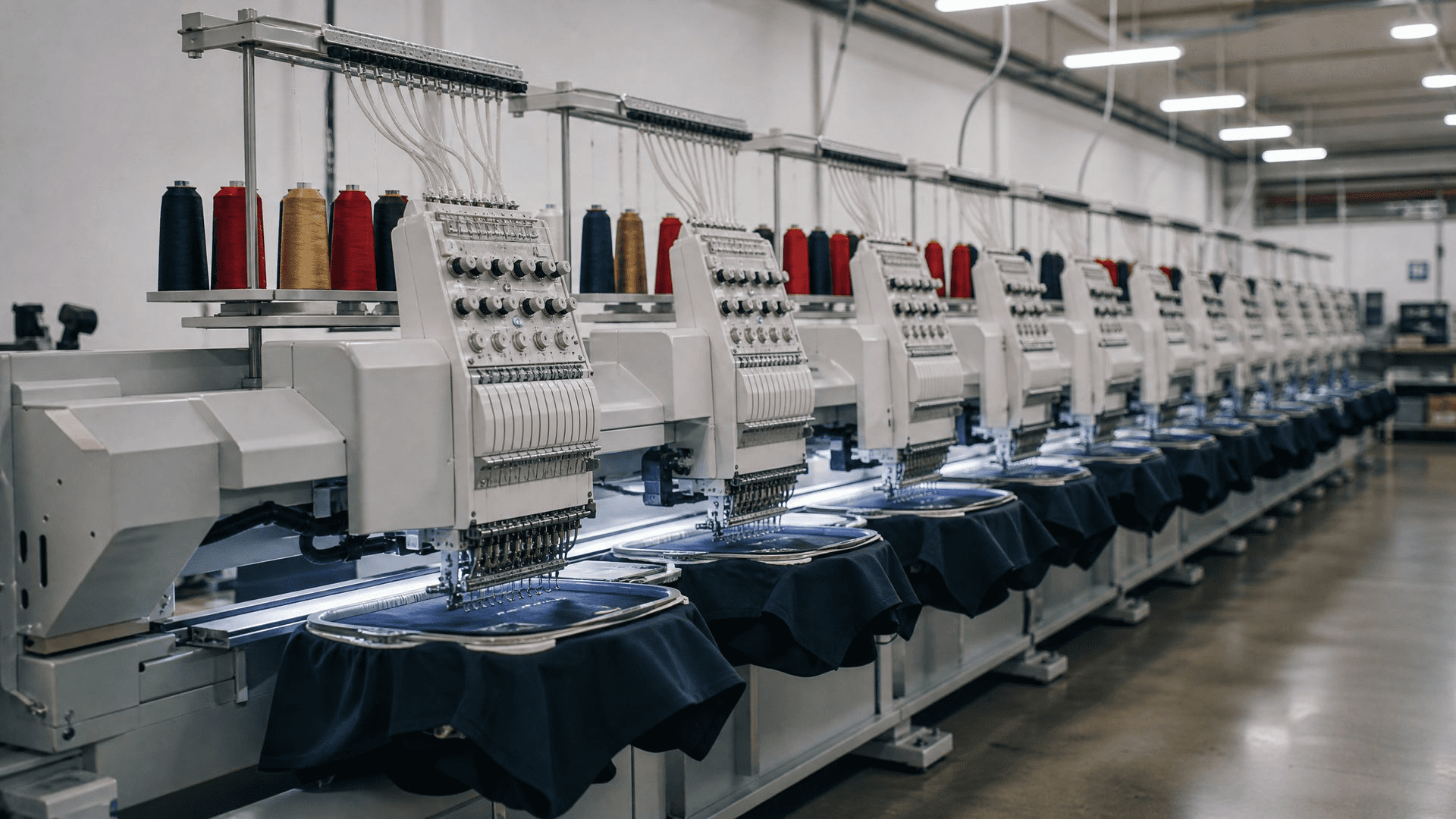
The factory capability that creates the most leverage in an enterprise supply chain is vertical integration: the ability to handle cut-and-sew, screen printing, embroidery, garment dyeing, washing, and specialty treatments under one roof. The reason is not efficiency, though that matters. The reason is accountability. When a factory controls every stage of the production process, there is one party responsible for the quality of the finished garment. When production is split across multiple facilities, each with its own quality standards and production schedules, the accountability structure collapses.
The practical impact of vertical integration on enterprise programs is most visible in embellishment. A factory that outsources its screen printing to a third-party decorator is introducing a variable that it cannot fully control. The decorator has its own production calendar, its own quality standards, and its own relationship with the brand that is separate from the factory's relationship. When a screen print defect appears on a finished garment, the factory and the decorator each have an incentive to assign responsibility to the other. The brand, which is managing the program from a distance, has no direct visibility into which party is correct. In-house embellishment eliminates this dynamic entirely.
Chapter 12: The Real Cost of a Bad Factory
The unit cost conversation is the wrong conversation. Enterprise sourcing directors who have been in the industry long enough have learned this the hard way. The factory that quotes you $2.50 less per unit than the factory you trust is not saving you money. It is transferring risk to you in a form that does not show up on the purchase order.
The real cost of a bad factory is not the defect rate on a single production run. It is the compounding cost of every downstream consequence: the chargebacks from retail partners, the customer returns, the brand damage from a product that fails in the field, the lost season while you rebuild a production program with a new factory, and the 12 to 18 months of relationship building required to get a new factory to the point where it understands your quality standards well enough to run your programs without constant intervention. McKinsey's research is explicit: the brands that are winning in 2026 are the ones that have invested in long-term strategic partnerships with manufacturers, including helping vendors update facilities and processes to combat volatility. That investment is not a cost. It is a hedge against the far larger cost of a supply chain failure.
The Sourcing Matrix: A Framework for 2026 and Beyond
The enterprise apparel sourcing matrix is not a fixed formula. It is a framework for making better decisions under uncertainty, and uncertainty is the defining condition of apparel sourcing in 2026. Tariff regimes are shifting. Trade agreements are being renegotiated. Consumer demand is volatile. The brands that will win in this environment are not the ones with the lowest unit costs. They are the ones with the most resilient, most strategically structured supply chains, built on factory partnerships that have been tested, audited, and developed over time.
The matrix described in this guide, multi-country architecture, tiered capacity allocation, in-line QC, single point of contact, vertical integration, and factory-direct relationships, is not a theoretical ideal. It is the operating model of the brands that are growing their apparel programs while their competitors are managing crises. Building it takes time. It requires investment in factory relationships that do not pay off immediately. It requires the organizational discipline to resist the temptation of the cheaper quote from the untested factory. But the brands that build it correctly are not just managing their supply chains. They are using their supply chains as a competitive advantage.
HH operates a factory in Bangladesh with over 2 million units per month in capacity, in-house capability across cut-and-sew, screen print, embroidery, garment dye, washes, and specialty treatments, and a production manager with 30 years of Bangladesh manufacturing experience overseeing every program. MOQs start at 300 units per style with 8 week lead times. If you are building or restructuring an enterprise supply chain and want to understand whether HH is the right Tier 1 partner for your programs, the conversation starts below.
Start the conversation with HH
Frequently Asked Questions
How many countries should an enterprise apparel brand source from?
According to the 2025 USFIA Fashion Industry Benchmarking Study, a record-high percentage of US fashion brands now source from 10 or more countries, and nearly 60% plan to add more sourcing countries in 2026. For a brand managing $5M+ in annual apparel spend, a minimum of three distinct production tiers across two to three countries is the baseline for a resilient supply chain architecture.
What is the China Plus One strategy in apparel sourcing?
China Plus One is a supply chain approach where brands maintain some production connection to China while moving their primary cut-and-sew volume to alternative manufacturing hubs. In 2026, Bangladesh, Vietnam, and India are the three most common destinations for US apparel brands executing this strategy. Oxford Industries reduced its China sourcing from 40% to 15% of total product purchases in a single fiscal year as part of this approach.
What is the right AQL standard for enterprise apparel production?
AQL 2.5 for major defects is the most common standard in apparel, meaning up to 2.5% of inspected units may have major defects before a lot is rejected. However, enterprise brands running high-volume programs should be demanding in-line QC from their factory partners, not just end-of-line AQL audits. Manufacturers with systematic in-line QC programs report defect rate reductions of 35% compared to end-of-line-only approaches.
Why is Bangladesh the preferred apparel manufacturing hub for US brands in 2026?
Bangladesh is the world's second-largest apparel exporter, generating over $45 billion in annual export value and US trade agreement framework that provides tariff exemptions on certain textile and apparel imports. The sector saw 30% export growth in April 2026 and is actively expanding into technical outerwear, performance synthetics, and complex construction categories.
What does a single point of contact mean in factory production management?
A single point of contact is a named production manager at the factory who is responsible for your program from tech pack submission to final audit. They have direct authority over production decisions, are physically present on the factory floor during your production runs, and are reachable without routing through a sales or account management layer. This structure eliminates the information loss and accountability gaps that occur when production management is distributed across multiple factory contacts or filtered through a sourcing agent.
How long does it take to rebuild a supply chain after switching factories?
Multiple leading US fashion companies noted in their 2026 earnings calls that full sourcing realignment takes 12 to 18 months minimum. This timeline accounts for factory qualification and auditing, sampling and fit approval, first production runs, and the iterative process of getting a new factory to understand your quality standards at a granular level. This is why the real cost of a bad factory relationship is not the defect rate on a single run, but the lost season and the 12 to 18 months required to rebuild.
What is vertical integration in apparel manufacturing and why does it matter?
Vertical integration means a factory handles cut-and-sew, screen printing, embroidery, garment dyeing, washing, and specialty treatments under one roof. It matters for enterprise programs because it creates a single point of accountability for the quality of the finished garment. When production is split across multiple facilities, each with its own quality standards, the accountability structure collapses and defect attribution becomes a dispute between parties. In-house embellishment eliminates this dynamic and reduces lead times by eliminating the logistics of moving goods between facilities.
What is a chase order and how should enterprise brands plan for it?
A chase order is a reorder placed on a style that has outperformed its sales forecast, typically requiring fast turnaround to capture revenue before the selling window closes. Enterprise brands should maintain a dedicated factory relationship specifically for chase orders, one with capacity headroom, raw material inventory, and in-house embellishment capability to turn a reorder in six to eight weeks. The cost of maintaining this relationship in seasons when it is not used is far lower than the cost of a missed chase order on a breakout style.