How to Switch Overseas Apparel Manufacturers Without Missing a Season
Switching your overseas cut-and-sew factory is not a gamble. It is a structured, parallel process that, when executed correctly, results in zero production disruption and a significant upgrade in quality, communication, and cost efficiency.

How to Switch Overseas Apparel Manufacturers Without Missing a Season
3 MINUTES
July 10, 2026
You know your current apparel manufacturer is holding you back. The defect rate is creeping up, the communication is a black box, and the pricing no longer makes sense for the volume you are pushing. Yet, you stay. In 2026, the fear of the transition is the single biggest anchor on scaling apparel brands. The internet is full of horror stories about brands that tried to move their production, hit a massive delay, and missed an entire season of inventory. Most brands die before they ever really live, not because the ideas were bad, but because the founders were paralyzed by operational risk. This is the guide for the operators ready to break the cycle.
Switching your overseas cut-and-sew factory is not a gamble. It is a structured, parallel process that, when executed correctly, results in zero production disruption and a significant upgrade in quality, communication, and cost efficiency. The key is understanding that you are not choosing between your current factory and a new one. You are building a bridge between them.
The Sunk-Cost Factory Trap
The decision to stay with a failing manufacturing partner is rarely based on loyalty. It is based on the Sunk-Cost Factory Trap. You have already invested months training their team on your fit blocks, your grading rules, and your preferred wash techniques. The thought of starting over with a blank slate feels like operational suicide, and so you rationalize staying. You tell yourself the 8% defect rate is just the cost of doing business. You accept that your sourcing agent takes three days to answer a simple question about a zipper placement. You absorb the quality inconsistencies and pass the cost on to your customer return rate.
This trap is incredibly tempting precisely because it is disguised as pragmatism. The real-world consequences, however, are devastating. Your margins erode season over season. Your customer experience suffers because inconsistent sizing and finish quality are invisible to you until they show up in reviews and chargebacks. Your brand equity is slowly bled dry by poor execution on the production floor. You are not avoiding risk by staying. You are guaranteeing stagnation. The right approach is to build a transition protocol that completely de-risks the move to a new, fully capable factory-direct partner, and to run that protocol in parallel with your existing production calendar.
The Transition Protocol: Run It in Parallel
The single most important rule of switching overseas apparel manufacturers is that you never fire your current factory before your new partner has passed a full sampling and pre-production cycle. You run both simultaneously. Your current factory fulfills your immediate seasonal needs while your new partner proves themselves on a test program. This parallel approach protects your cash flow, your retail commitments, and your sanity.
The protocol breaks down into three distinct phases. The first is asset consolidation. Before you send a single inquiry to a new factory, you must get your technical documentation in order. Your tech packs, graded pattern files, Bill of Materials, and physical reference samples must be complete, accurate, and digitized. A new factory cannot execute your vision if your documentation is a mess of informal email threads and WhatsApp messages. This step alone will reveal more about the health of your current production program than anything else.
The second phase is the complexity test. When you initiate sampling with a new partner, you do not test them with a basic blank t-shirt. You test them with your hardest piece. If you run a fleece program, send them a heavy-weight garment-dyed hoodie with a specialty vintage wash. If you run outdoor lifestyle or ski apparel, send them your most technical woven or performance synthetic. A factory that can nail the complex piece will handle the basics effortlessly. A factory that stumbles on the complex piece has told you everything you need to know before you have committed a single dollar to bulk production.
The third phase is the overlap window. Once your new partner has delivered a pre-production sample that meets your standards, you place your first bulk order while your current factory is still mid-production on your existing seasonal program. The overlap window, typically four to eight weeks, is your safety net. By the time your current factory ships your final order under the old relationship, your new partner is already in production on the next one.
What to Look for in a Factory-Direct Partner
Not all overseas factories are built for the kind of programs that scaling brands and retailers actually need. The difference between a factory that can handle a 5,000-unit basic t-shirt run and one that can execute a full cut-and-sew fleece program with garment dye, specialty washes, embroidery, and screen print under one roof is enormous. When you are vetting your next partner, these are the non-negotiable criteria.
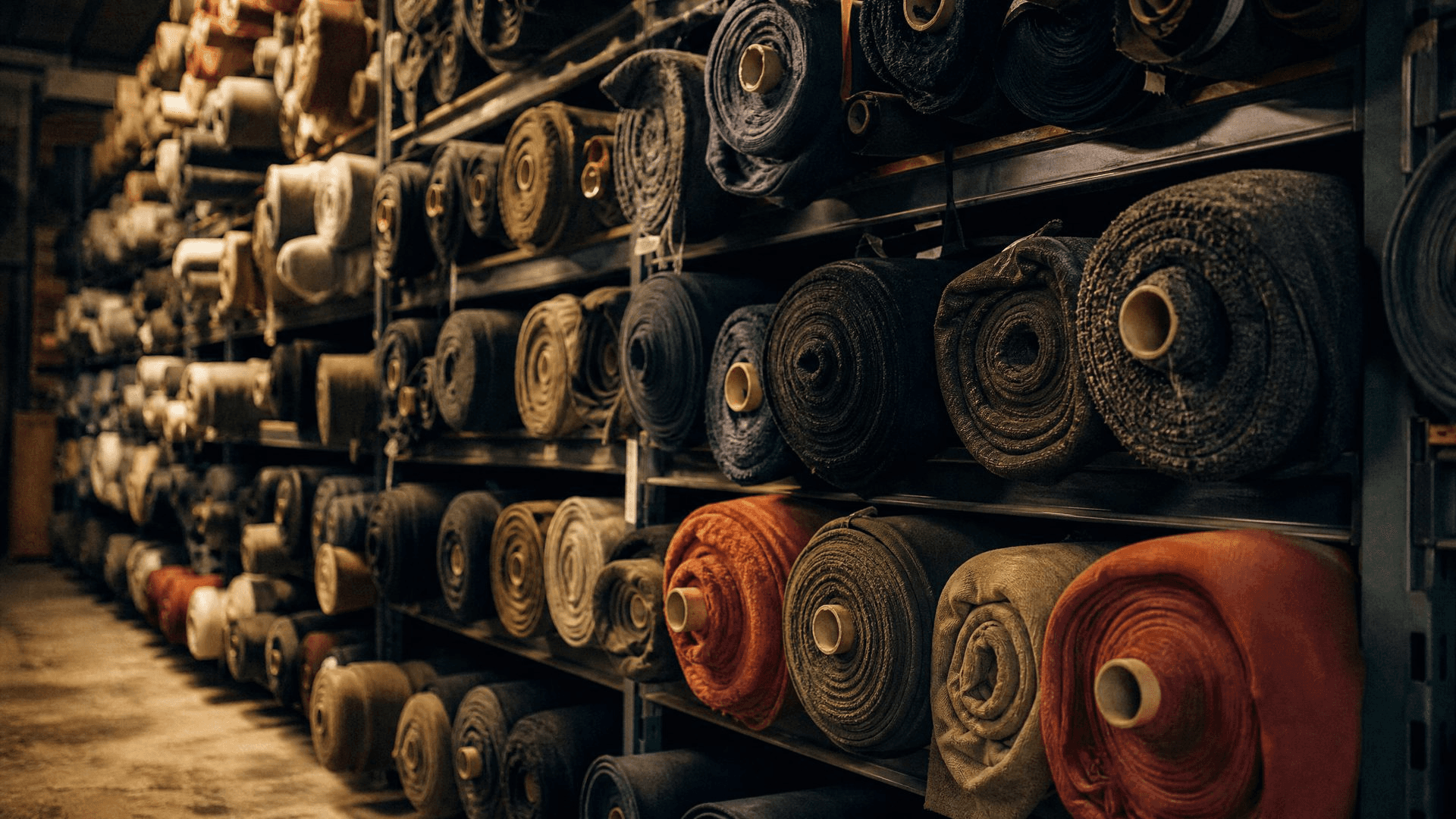
In-house capabilities across all treatments. If your factory subcontracts your washes, your embroidery, or your screen print to a third-party facility, you have introduced quality control gaps that you cannot manage. Your partner must own the full process. Our Dhaka facility runs cut-and-sew fleece, wovens, performance synthetics, and knits with in-house screen print, embroidery, garment dye, washes, and specialty treatments. There is no handoff to a vendor you have never vetted.
Direct project management with a single point of contact. The communication model of most overseas production relationships is broken by design. You email a sales rep, who emails an agent, who emails a factory coordinator, who walks the floor. By the time a question about a seam allowance gets answered, three days have passed and the production run has moved on. You need a single point of contact who is physically present at the factory and has the authority to make decisions on the floor. Our programs run with direct project management from tech pack to delivery, with no middleman in the chain.
Capacity that matches your growth trajectory. A factory running 2 million units a month has the infrastructure, the staffing, and the supply chain relationships to scale with you as your brand grows. A boutique operation that maxes out at 50,000 units a month will become a bottleneck the moment you land a major retail account.
Aggressive MOQs that support your inventory strategy. The high-MOQ model is a trap for scaling brands. Being forced into 2,000-unit minimums on a new style means you are either over-inventorying or you are not testing new product. Our minimums start at 100-300 units per style, which means you can run a legitimate market test on a new silhouette without betting your entire open-to-buy on it.
The Case for Bangladesh Factory-Direct
Major brands do not run their production programs through Alibaba directories or sourcing agents with opaque factory relationships. They partner with facilities that have the technical depth to execute complex programs at scale. Bangladesh, specifically Dhaka, has evolved far beyond the basic t-shirt and polo shirt narrative that dominated the industry a decade ago. The top-tier facilities in Dhaka are running technical outerwear, performance synthetics, and specialty-wash fleece programs for brands that demand the same quality standards as any European or domestic production run.
When you cut out the sourcing agent and work directly with an owned-and-operated facility, you eliminate the 10-20% markup that agents build into every per-piece cost. More importantly, you eliminate the communication bottleneck that causes most overseas production failures. Our production manager in Dhaka has 30 years of sourcing and manufacturing experience in the region. That institutional knowledge, combined with direct oversight of the floor, is the difference between a factory relationship that compounds in value over time and one that degrades season after season. If you are evaluating your supply chain options, moving volume to Bangladesh through a direct, owned facility is the most defensible sourcing decision available to a scaling brand in 2026.
The Marathon, Not the Sprint
Switching your apparel manufacturer is a strategic maneuver that redefines the trajectory of your business. It requires meticulous preparation, parallel testing, and an uncompromising standard for vetting your new partner. Do not let the fear of a transition keep you anchored to a factory that is actively damaging your brand. The brands that dominate their categories do not settle for mediocre execution or agent markups. They partner directly with the source. They demand transparency, high-capacity execution, and absolute quality control at every production stage. Make the move, consolidate your supply chain, and build your brand on a foundation that can actually support your scale.
If you are ready to explore what a factory-direct partnership looks like for your specific program, reach out to our team and we will walk you through the transition protocol from day one.
Frequently Asked Questions
How long does it take to switch clothing manufacturers?
A safe and fully de-risked transition takes approximately three to four months. This allows you to run a complete sampling and pre-production phase with the new factory while your current partner finishes your immediate seasonal orders. Brands that rush this process are the ones that miss seasons.
What files do I need to move my apparel production overseas?
You must provide complete, digitized tech packs with construction details and measurement specs, graded pattern files, a clear Bill of Materials covering all fabrics, trims, and hardware, and physical reference samples for fit and finish. The more complete your documentation, the faster a new factory can execute to your standard.
How do I vet a new cut-and-sew factory before ordering?
Verify their in-house capabilities across all treatments you require, demand direct communication with the production manager rather than a sales intermediary, confirm their monthly capacity and growth headroom, and require a test sample of your most complex garment before committing to bulk. A factory that passes the complexity test will handle the rest of your line without issue.
What is the typical MOQ for a direct factory in Bangladesh?
Large commodity factories often require thousands of units per style, which is not workable for scaling brands managing inventory risk. A specialized direct facility should offer MOQs starting at 300 units per style, giving you the flexibility to test new product without over-committing capital.
Should I use a sourcing agent or go factory-direct?
You should go factory-direct whenever possible. Sourcing agents typically add a 10-20% markup to per-piece costs, obscure the true factory of record, and create communication delays that compound into quality control failures. A direct relationship with an owned-and-operated facility gives you full visibility into the production floor and a single accountable point of contact from tech pack to delivery.