The 6 Non-Negotiables When Choosing an Overseas Apparel Factory
You need an overseas apparel factory. Welcome to the club. In 2026, the internet is flooded with directories, brokers, and trading companies all claiming to be the perfect manufacturing partner. The problem is not finding a factory; the problem is finding a factory that will not burn you on your first six-figure purchase order.

The 6 Non-Negotiables When Choosing an Overseas Apparel Factory
3 MINUTES
July 20, 2026
So, you are ready to scale. Your domestic production runs have proven the demand, your margins are getting squeezed by local screen printers, and your CFO has made it clear that the next stage of growth requires a fundamental shift in your supply chain. You need an overseas apparel factory. Welcome to the club. In 2026, the internet is flooded with directories, brokers, and trading companies all claiming to be the perfect manufacturing partner. The problem is not finding a factory; the problem is finding a factory that will not burn you on your first six-figure purchase order.
When a brand makes the leap to overseas production, they usually focus entirely on unit cost. They build spreadsheets comparing fractions of a dollar across different facilities in Vietnam, China, and Bangladesh. This is the wrong approach. A cheap unit cost is meaningless if the goods arrive six weeks late, the sizing is completely inconsistent, and the wash looks nothing like the pre-production sample. The true cost of a bad factory is not the unit price; it is the lost season, the damaged brand reputation, and the capital tied up in unsellable inventory.
This is the guide for the operators. If you are a sourcing director or a brand founder evaluating manufacturing partners for a serious production program, you cannot afford to learn these lessons through trial and error. You need a rigid evaluation framework. Before you sign a contract or wire a deposit, the facility must meet these six non-negotiable requirements. If they fail even one, walk away.
1. True Owned-and-Operated Infrastructure
What should you look for first in an overseas apparel manufacturing partner? You must verify that the entity you are speaking with actually owns the sewing machines on the floor. The apparel sourcing industry is saturated with trading companies posing as direct manufacturers. These brokers will take your order, add a 20% markup, and subcontract the actual production to the lowest bidder.
When you work with a trading company, you have zero visibility into the actual supply chain. If a seam fails or a fabric weight is incorrect, the broker has to call the factory to find out why, creating a massive communication bottleneck. A true owned-and-operated facility controls the entire process. They employ the workers, they maintain the equipment, and they manage the production schedule directly. To verify this, demand a live video walkthrough of the factory floor during operating hours. If the representative deflects or refuses, they are a middleman.
2. In-House Embellishment and Finishing
The most common point of failure in overseas apparel production occurs when garments leave the primary facility. Many factories are strictly Cut, Make, and Trim (CMT) operations. They can sew the garment, but if your design requires a vintage enzyme wash, high-density screen printing, or complex embroidery, they have to send the goods to a secondary facility.
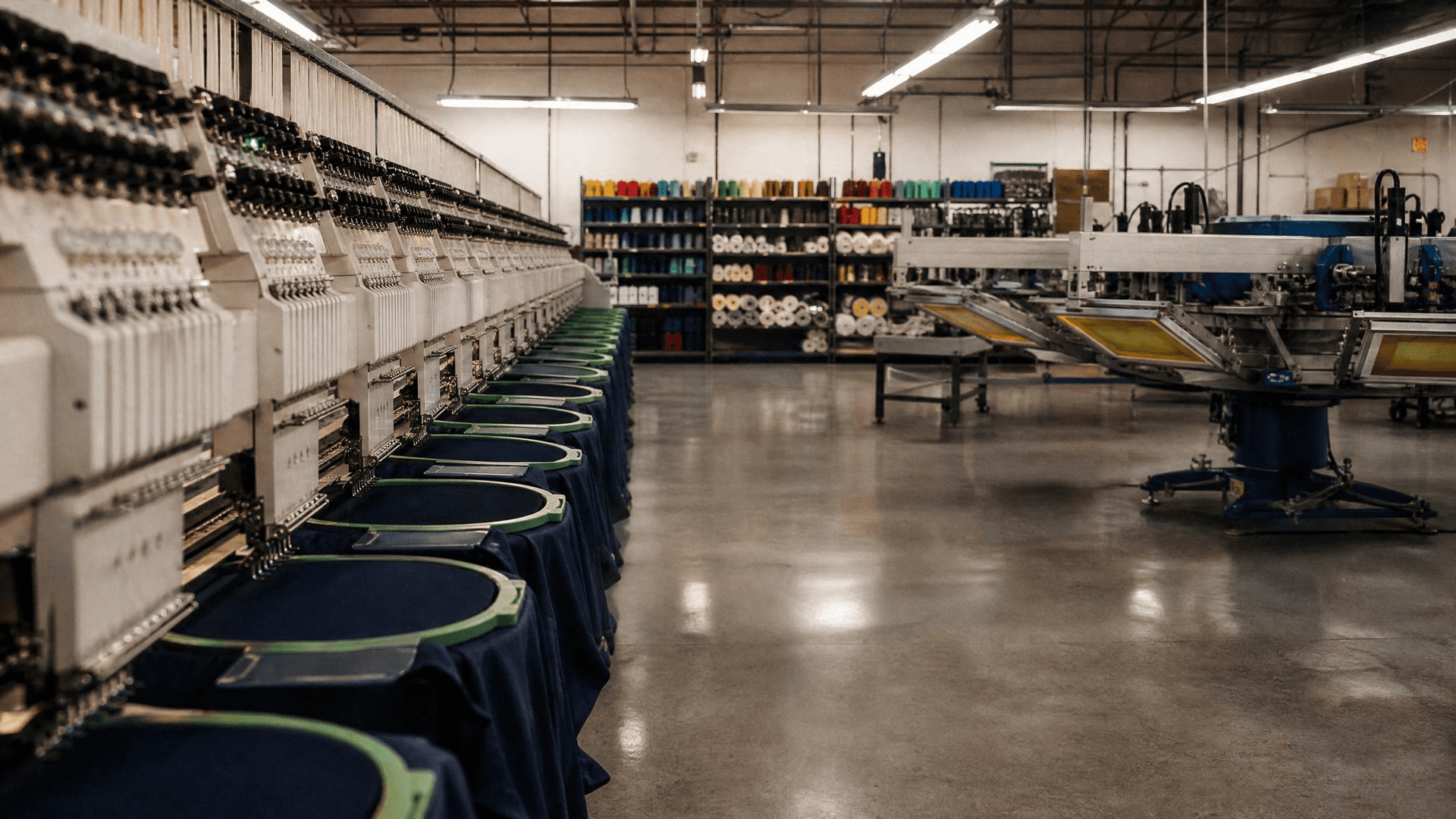
Every time your product moves to a subcontractor, your risk compounds. The primary factory loses control over the timeline and the quality. If the dye house ruins the wash, the primary factory will blame the subcontractor, the subcontractor will blame the fabric, and you will be left with unsellable goods. A non-negotiable requirement for any serious production partner is comprehensive in-house capability. The facility must have its own dyeing, washing, printing, and embroidery departments under the same roof as the sewing floor. This vertical integration is the only way to ensure accountability and consistent quality control across complex technical garments.
3. Direct Access to the Production Manager
The communication structure between your brand and the factory will dictate the success of the program. If you are forced to route every technical question through a salesperson who has never threaded a needle, your development calendar will grind to a halt. Sales representatives are incentivized to say yes to everything and figure out the logistics later.
You must receive direct, unfiltered access to the production manager who will actually oversee your program on the floor. This person should have decades of specific regional experience and a deep understanding of garment construction. When your product development team has a question about how a specific synthetic fabric will react to a flatlock seam, they need to speak directly to the technical expert running the line. A transparent factory will welcome this level of direct communication because it prevents costly errors before bulk production begins.
4. A Rigid Pre-Production Approval Protocol
It happens when a brand wires a 50% deposit based on a decent prototype, only to receive a bulk order that looks entirely different. They assumed the factory understood the assignment, but they never established a formal approval process.
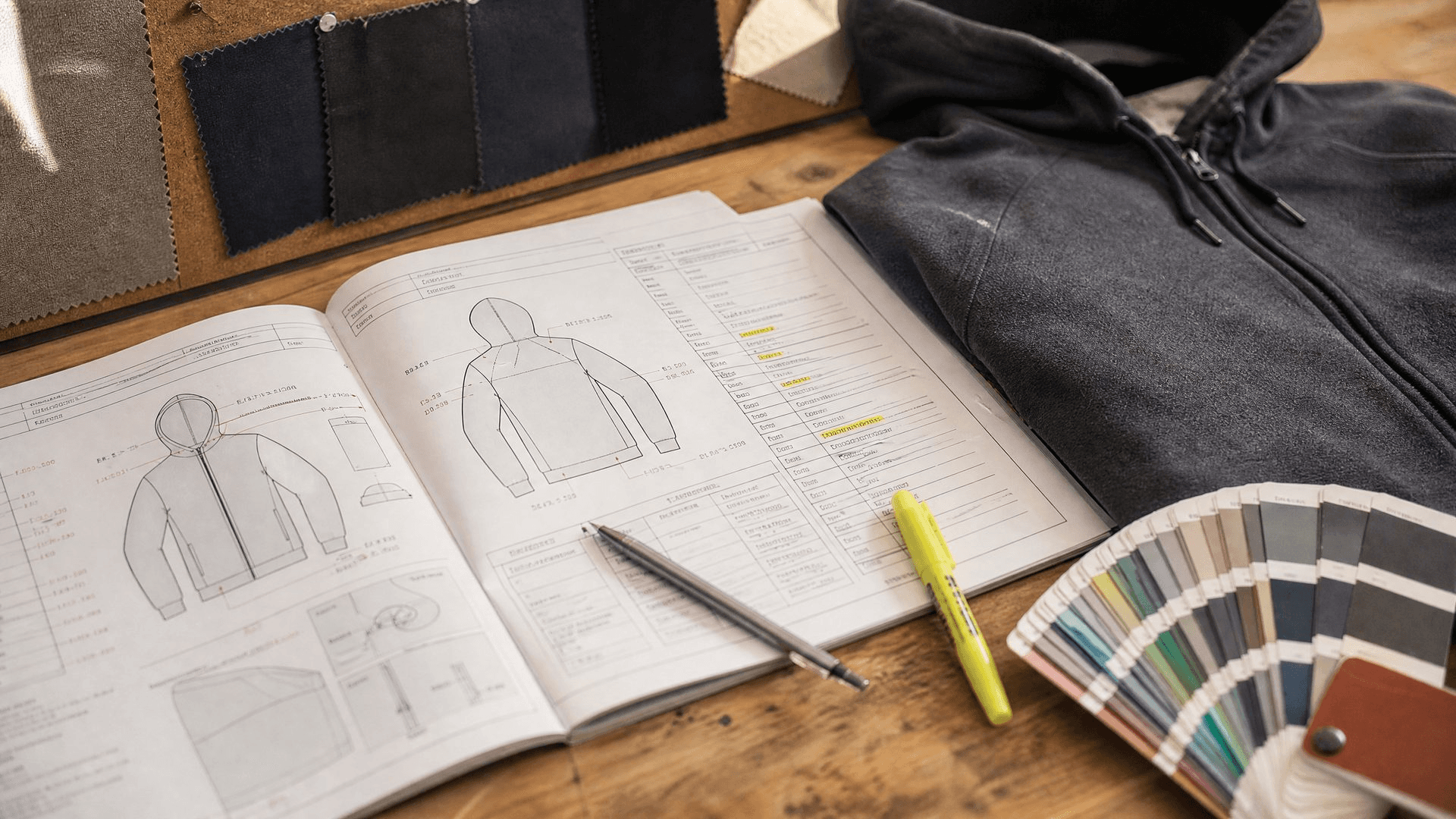
A professional factory operates on a strict, documented protocol. Before a single yard of bulk fabric is cut, the facility must provide a Pre-Production (PP) sample that uses the exact bulk fabric, the exact trims, and the exact wash processes specified in your tech pack. You must physically approve this sample. Once sewing begins, the factory must provide a Top of Production (TOP) sample, which is the first finished unit pulled directly off the bulk line. This proves that the floor is executing the bulk run to the exact standard of the PP sample. If a factory tries to rush you past these approval stages to hit a delivery date, they are prioritizing their cash flow over your product quality.
5. Dedicated In-Line Quality Control
Quality control cannot be an afterthought. Many factories rely entirely on end-of-line inspections, meaning they only check the garments after they are completely sewn, pressed, and ready for polybags. By the time an error is caught at this stage, it has already been replicated across thousands of units.
A non-negotiable requirement is a dedicated in-line quality control team. This means the factory employs inspectors who walk the sewing floor continuously, checking garments at individual stations while they are actively being constructed. If a machine tension is off or a worker is misaligning a pocket, the in-line QC team catches it on the first unit, not the five-hundredth. When evaluating a facility, ask them to explain their specific in-line inspection process. If their answer focuses only on final audits, their defect rate will be unacceptably high.
6. Aggressive, Scalable Minimums
The final non-negotiable is a factory's approach to Minimum Order Quantities (MOQ). Traditional overseas factories often demand 1,000 to 5,000 units per style just to turn the machines on. This forces brands to over-leverage their inventory, tying up massive amounts of capital in unproven styles just to access factory-direct pricing.
Your manufacturing partner must be structured to support your growth, not hinder it. You need a facility that is willing to run aggressive MOQs starting at 100 to 300 units per style, while maintaining the capacity to scale immediately when a product hits. This flexibility allows your merchandising team to test new silhouettes and colorways without betting the entire seasonal budget on a single style. A factory that can execute a 300-unit test run with the same precision as a 30,000-unit core program is a true operational partner, not just a vendor.
The Standard for Factory-Direct Sourcing
Choosing an overseas apparel factory is not a procurement exercise; it is an operational integration. You are extending your supply chain across the globe, and you must hold that facility to the exact same standards you would hold an internal team. If you compromise on these six non-negotiables, you are actively choosing to take on massive operational risk. You will pay for that compromise in missed deadlines, high defect rates, and constant frustration. The brands that scale successfully do not get lucky with their factories; they are ruthless in their vetting process.
HH operates a vertical, owned-and-operated facility in Bangladesh with over 2 million units of monthly capacity. Every program is overseen by a production manager with 30 years of regional experience, running with a single point of contact, rigorous in-line quality control, and MOQs built to scale. In-house capabilities span screen print, embroidery, garment dye, specialty washes, and full cut-and-sew across fleece, wovens, performance synthetics, and knits. If you are evaluating factory partners for a serious production program, reach out to our team and we will walk you through the process from tech pack to delivery.
Frequently Asked Questions
What should I look for in an overseas apparel manufacturing partner?
Look for comprehensive in-house capabilities including dyeing, washing, printing, and embroidery. Ask for direct access to the floor production manager, and ensure they have a strict in-line quality control process and a formal sample approval protocol before bulk production begins.
How do I verify that an overseas clothing factory is legitimate?
The most effective way to verify a factory is to ask for a live video walkthrough of the production floor during operating hours. A legitimate, owned-and-operated facility will welcome this transparency. A broker or trading company will deflect, offer photos instead, or schedule the call for a time when the floor is not running.
What is a standard MOQ for an overseas apparel factory in Bangladesh?
While traditional overseas factories often require Minimum Order Quantities of 1,000 to 5,000 units per style, modern, scalable partners can offer aggressive MOQs starting at 100 to 300 units per style. This allows brands to test new products without over-leveraging their inventory capital.
How do you manage quality control when manufacturing apparel overseas?
Effective overseas quality control requires two things: a strict approval protocol requiring physical sign-off on Pre-Production (PP) and Top of Production (TOP) samples, and a factory that utilizes dedicated in-line inspectors who check garments during the sewing process rather than only at the end of the production line.