Why Festival Merchandise Has Become a Commodity (And How to Fix It)
The single biggest constraint on the growth of your merchandise program is not your brand, your audience, or your price point. It is your supply chain. You are running a multi-million dollar retail operation that is forced to rely on a production infrastructure built for a different era: low-cost, high-volume, and low-creativity promotional products. You have built a world-class brand, and you are being held back by a world of generic blanks and a lack of customization options.
Why Festival Merchandise Has Become a Commodity (And How to Fix It)
3 MINUTES
March 9, 2026
The single biggest constraint on the growth of your merchandise program is not your brand, your audience, or your price point. It is your supply chain. You are running a multi-million dollar retail operation that is forced to rely on a production infrastructure built for a different era: low-cost, high-volume, and low-creativity promotional products. You have built a world-class brand, and you are being held back by a world of generic blanks and a lack of customization options.
This is the core challenge for every Head of Merchandise at a major festival today. You know what great looks like. You have the budget, the brand, and the audience to build a program that rivals the best streetwear labels in the world. But the supply chain you are forced to work with is not built for that. It is built for scale, not for quality. It is built for efficiency, not for creativity. And as your program has grown, you have been forced to make a series of compromises that have slowly eroded the quality and creativity of your product. This is the commodity trap.
This is not an accident. It is the result of a systemic problem in the supply chain. The traditional merchandise industry is built on a foundation of volume, efficiency, and low cost. It is a world of promotional product distributors, not brand builders. They are not in the business of creative direction or quality manufacturing. They are in the business of moving units. And as your festival has scaled, you have been forced to rely on these vendors to meet your volume requirements, and in the process, you have sacrificed the quality and creativity that your brand was built on. This is the commodity trap. This article is the way out.
The Commodity Trap: How the Promotional Products Industry Killed Festival Merch
The root of the problem is the promotional products industry. This is a supply chain that was designed for a different purpose: to produce high volumes of low-cost goods for corporate giveaways. It was never intended to be the production engine for a modern, brand-led retail operation. But as festivals have scaled, they have been forced to rely on this infrastructure to meet their volume requirements, and the result has been a slow, steady drift toward commoditization.
For decades, this was fine. Festival merch was an afterthought, a way to make a few extra dollars at the end of the weekend. But as festivals have evolved from niche gatherings into global cultural events, the merchandise has not kept pace. The same vendors who were supplying you with 5,000 t-shirts a decade ago are now supplying you with 50,000, and they are using the same low-quality blanks, the same basic print techniques, and the same uninspired design templates they have always used. The only thing that has changed is the scale.
This creates a vicious cycle. Because the product is low-quality and uninspired, the only way to sell it is to price it cheaply. And because you are pricing it cheaply, you have to sell a massive volume of it just to break even. This forces you to double down on the very same low-cost, high-volume production model that is creating the problem in the first place. You are stuck in a commodity trap, and the only way out is to fundamentally rethink your approach to the entire program.
The Fix: Thinking Like a Brand, Not a Merch Vendor
The festivals that are breaking out of the commodity trap are the ones that have stopped thinking about their merchandise program as a licensing deal and started thinking about it as a core part of their brand. They have realized that their merchandise is not just a revenue stream; it is a marketing channel, a community-building tool, and a direct, physical manifestation of their brand identity. They are not just selling hoodies; they are selling artifacts of a cultural experience.
This shift in mindset changes everything. It means you stop asking "how can we sell more t-shirts?" and you start asking "how can we create a product that our fans will be genuinely excited to buy and wear for years?" It means you stop thinking about your merch booth as a point of sale and you start thinking about it as a retail experience. And it means you stop working with promotional product distributors and you start working with a partner who can act as the creative and production engine for your brand.
This is the playbook for making that shift. It is a four-part framework for building a premium, high-margin merchandise program that is worthy of your brand.
Part 1: The Creative Foundation: Custom Cut-and-Sew
The single most important decision you can make to elevate your merchandise program is to move away from off-the-shelf blanks and invest in custom cut-and-sew production. This is the difference between a generic product that anyone can buy and a unique, proprietary garment that is exclusive to your brand.
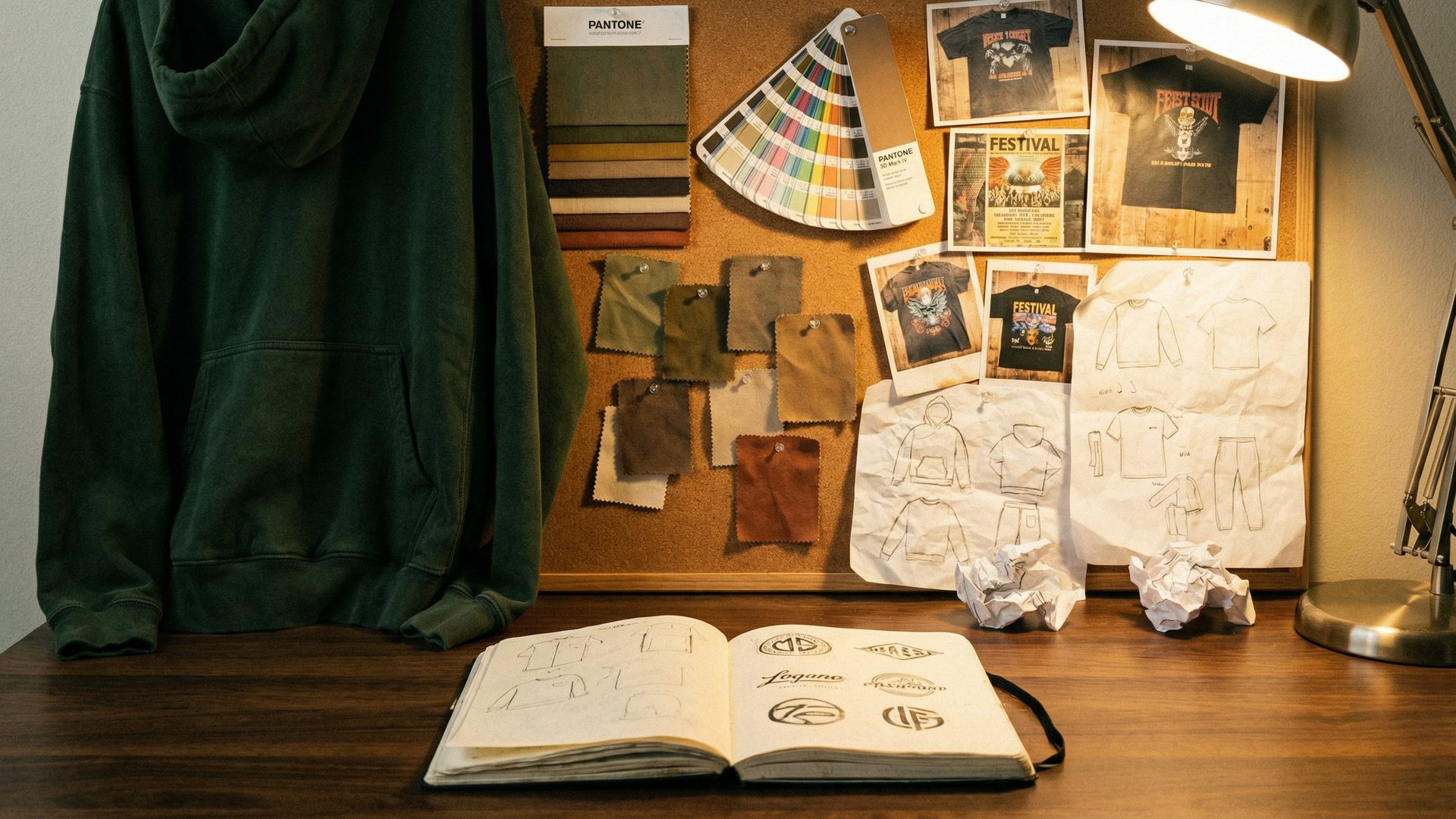
Custom cut-and-sew means you are not just choosing a blank hoodie from a catalog and printing a logo on it. You are designing the garment from scratch. You are choosing the fabric, developing the color palette, creating the pattern, and specifying every single detail, from the weight of the fleece to the type of zipper to the style of the drawcord. This is how you create a product that feels intentional, premium, and authentic to your brand.
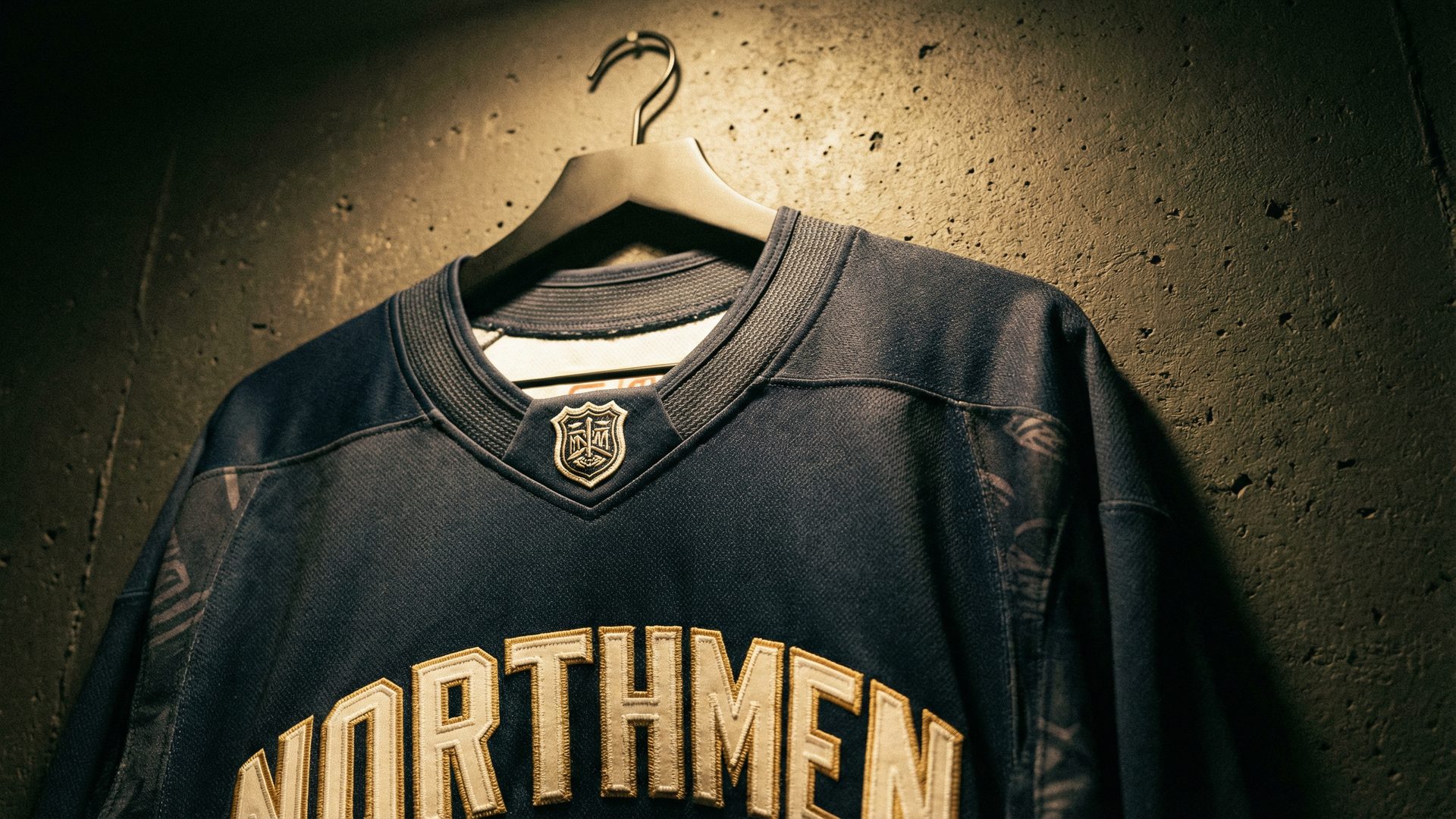
The hero product of the modern festival program is the custom hockey jersey. It is a high-ticket item that fans are willing to pay a premium for, and it is a canvas for rich, detailed storytelling. A great hockey jersey features layered twill logos, intricate embroidery, custom patches, and sublimated artwork that tells the story of your festival. It is the ultimate status symbol for your most dedicated fans, and it is a product that simply cannot be replicated with off-the-shelf blanks. A well-executed festival hockey jersey retails between $120 and $180, carries a strong margin, and sells out in hours at a well-run event.
The same principle applies across your entire collection. A custom garment-dyed heavyweight hoodie in a proprietary color, with a tonal embroidered logo and custom ribbing, is a fundamentally different product from a Gildan hoodie with a screen-printed logo. The fan who buys it knows the difference. They can feel it the moment they pick it up. And that feeling, that sense of quality and intention, is what creates the emotional connection that turns a one-time buyer into a lifelong fan of your brand.
Part 2: The Production Engine: Quality at Scale
The challenge for a major festival is not just producing a premium product; it is producing a premium product at a massive scale. You need a partner who can manufacture tens of thousands of custom garments to a consistently high standard and deliver them on time for your event. This requires a level of production expertise that most merch companies simply do not have.
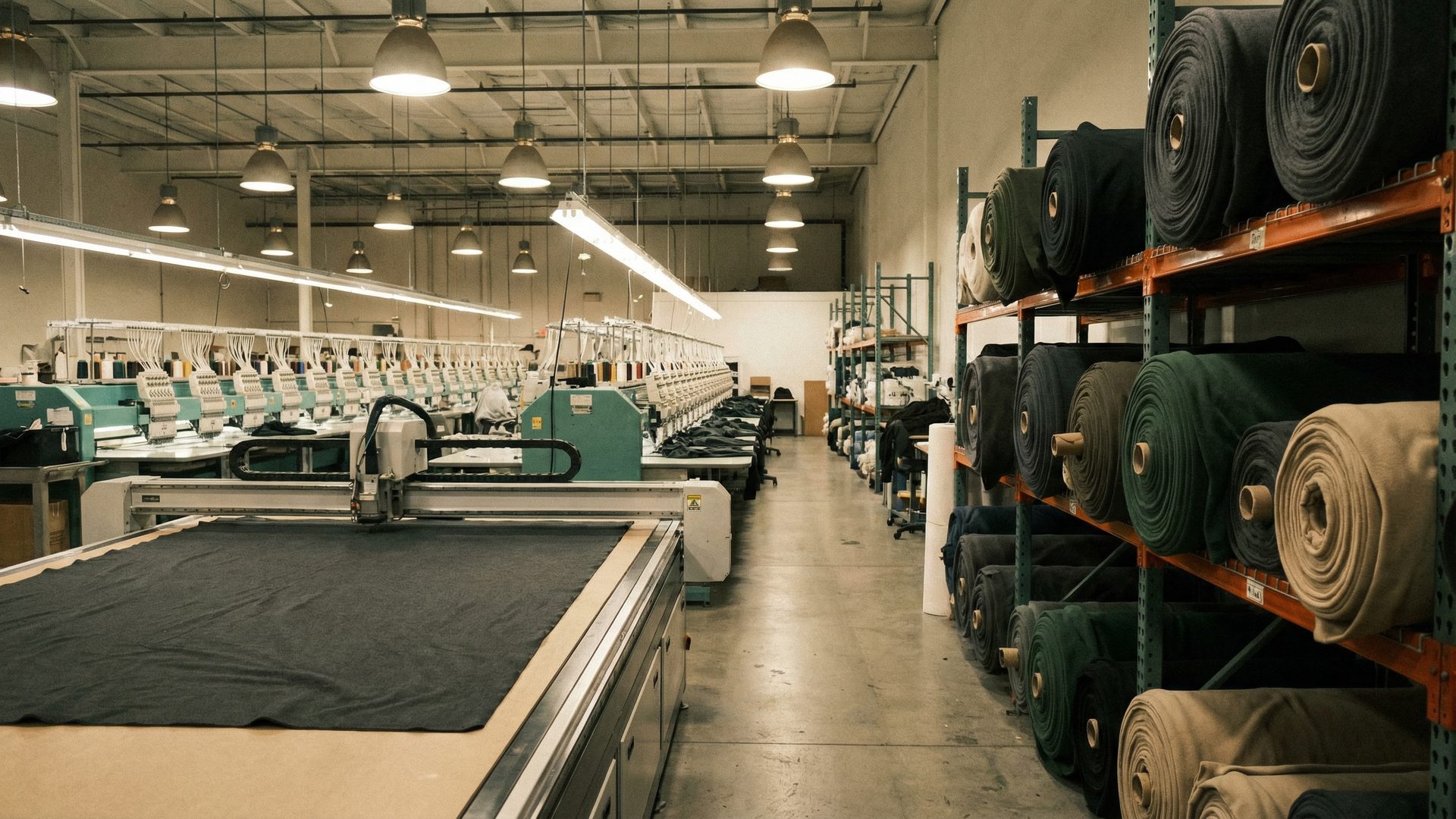
A true production partner will have a global network of factories that they have personally vetted and audited for quality and compliance. They will have a team of production managers and quality control specialists overseeing every step of the process, from fabric knitting and dyeing to cutting, sewing, and finishing. They will have a rigorous quality control process that ensures every garment meets your exact specifications. And they will have the logistical infrastructure to manage a complex global supply chain and deliver your product to multiple locations on a tight deadline.
This is the invisible engine of a great merch program. Without a world-class production engine, even the best creative ideas will fall apart at scale. The festivals that are winning are the ones that have invested in a production partner who can execute at the highest level, consistently, across every event in their calendar.
Part 3: The Retail Experience: Beyond the Merch Booth
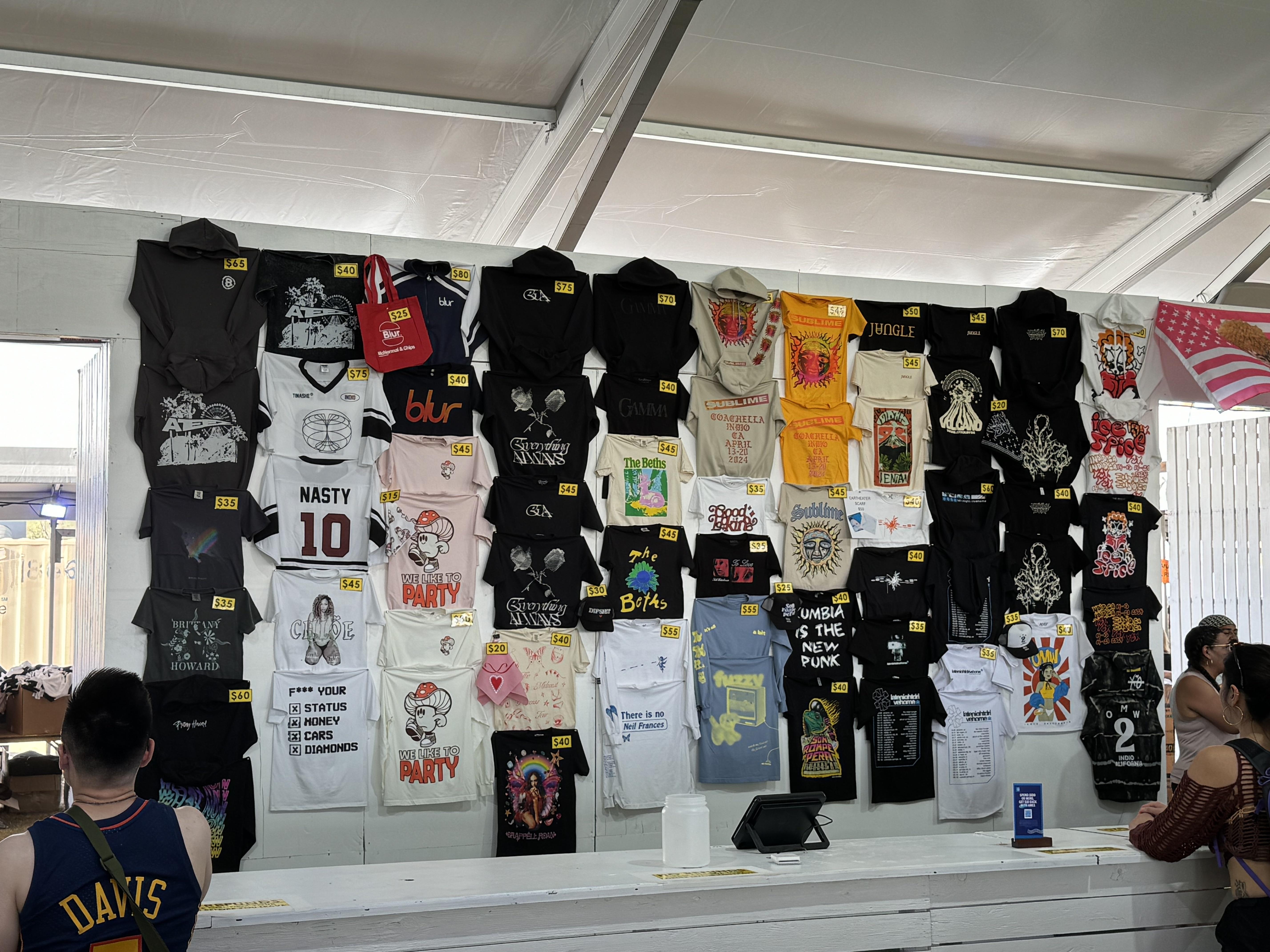
For most festivals, the on-site retail experience is an afterthought. It is a series of pop-up tents with folding tables and metal racks. The product is disorganized, the staff is untrained, and the entire experience feels transactional and uninspired. This is a massive missed opportunity. Your on-site retail is the single biggest opportunity you have to create a memorable, immersive brand experience for your fans.
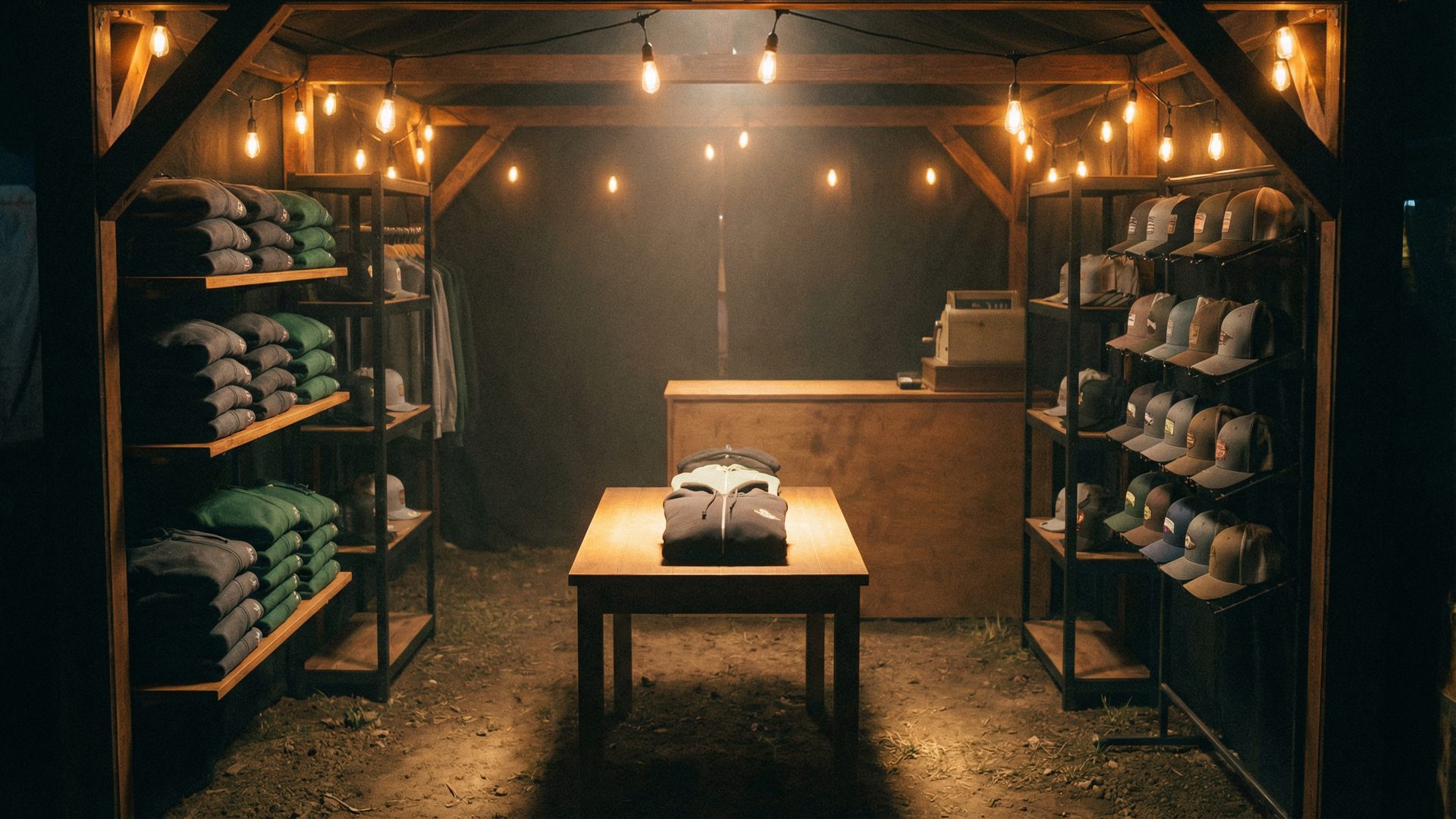
The best festivals are starting to treat their on-site retail like a flagship store. They are investing in custom-built pop-up shops, professional lighting, and beautiful visual merchandising. They are creating a shopping experience that is as curated and intentional as the festival itself. They are using their retail footprint to tell a story, to create a sense of discovery, and to make the act of buying merchandise a memorable part of the festival experience.
The product mix matters as much as the environment. A great festival retail operation is not a wall of t-shirts in every size. It is a curated collection of 8-12 SKUs, each one designed with intention and positioned at a price point that reflects its quality. The hero product, whether that is a custom hockey jersey, a garment-dyed heavyweight hoodie, or a limited-edition collab piece, should be the centerpiece of the display. Supporting items, like caps, tees, and accessories, should be merchandised to complement the hero, not compete with it.
Part 4: The Ecommerce Engine: Year-Round Revenue
Your festival may only happen once a year, but your brand is alive 365 days a year. Your ecommerce store is the primary way that you keep your community engaged and generate revenue between festival cycles. A great ecommerce operation is not just a place to sell leftover inventory; it is a strategic, year-round business.

This means you need a partner with deep expertise in direct-to-consumer ecommerce. They should be able to build and manage a world-class Shopify Plus store, develop a year-round drop cadence to keep the store fresh and exciting, and run a sophisticated email and SMS marketing program to drive traffic and conversions. The most effective ecommerce strategy for a festival brand follows a three-phase calendar. In the pre-festival window, you run a limited online drop to build hype and capture early demand. During the event, you offer on-site exclusives that are not available online, creating urgency for the fans who are there in person. In the post-festival window, you release a vault collection of event-exclusive items for fans who missed out, capturing the long tail of demand.
A well-executed ecommerce strategy can generate revenue that rivals or exceeds your on-site retail operation, and it does so with significantly higher margins because you are not paying for on-site staffing, fixtures, or logistics. For a major festival with a strong brand and a dedicated fanbase, a seven-figure ecommerce business is not an aspiration; it is a realistic outcome with the right partner and the right strategy.
The HH Partnership: Your Full-Package Creative and Production Partner
The reason most festival merchandise programs are stuck in the commodity trap is not a lack of ambition. It is a lack of the right partner. The traditional merch industry is not set up to deliver the kind of creative direction, production quality, and ecommerce expertise that a modern festival brand needs. It is set up to move units at the lowest possible cost, and that is exactly what it delivers.
HH is a different kind of partner. We are a full-package creative and production company built specifically for the most ambitious brands in the world. We provide a single, unified solution that consolidates the entire merchandise supply chain, from creative direction and product design to manufacturing, on-site retail strategy, and ecommerce operations. We are not a promotional products distributor. We are a team of brand strategists, creative directors, product designers, and production experts who act as the dedicated merchandise department for your business.
We have built this platform because we believe that merchandise is one of the most powerful and under-leveraged brand-building tools in the world. A great product creates a deep, emotional connection with your fans. A great merchandise program is a significant source of revenue and a powerful competitive advantage.
Frequently Asked Questions
What is the first step to improving a festival's merchandise program?
The first step is a strategic decision to move away from the commodity model and invest in a premium, brand-led program. This means committing to a higher standard of quality and creativity, and finding a partner who can help you execute on that vision. For most festivals, the starting point is a creative audit of the existing program and a conversation about what the brand is actually capable of.
How long does it take to develop a custom cut-and-sew program for a major festival?
For a full collection of custom garments, the process typically takes 6-9 months from the initial creative brief to having finished goods ready for your event. This includes time for design, fabric development, sampling, and bulk production. It is a significant undertaking that requires long-term planning, which is why the best festival programs begin development for the following year immediately after the current event.
What is a realistic budget for a premium festival merchandise program?
For a major festival looking to produce a full collection of custom cut-and-sew apparel, the initial inventory investment will be in the high six-figures to low seven-figures. This is a significant investment, but the return in terms of both profit margin and brand equity is exponentially higher than a traditional, blank-based program. The right budget depends on your festival's scale, your target retail price points, and the number of SKUs in your collection.
What products sell best at major music festivals?
Premium hoodies and custom hockey jerseys consistently outperform all other categories at major festivals, both in units sold and in total revenue. Fans are willing to pay a significant premium for a well-designed, high-quality garment that they can wear long after the event. Caps, tees, and accessories serve as accessible entry points for fans with smaller budgets, but the hero products drive the majority of the program's revenue and brand value.
How do we balance on-site sales with our year-round ecommerce store?
The key is to create a clear distinction between the two channels. Use your on-site retail for exclusive, limited-edition items that create a sense of urgency and reward the fans who are there in person. Use your ecommerce store for a broader, evergreen collection, punctuated by limited online drops that keep the community engaged throughout the year. This two-channel strategy maximizes both on-site revenue and year-round ecommerce performance.
What is the biggest mistake festivals make with their merchandise?
The biggest mistake is underestimating the brand-building power of a great product. Most festivals treat merchandise as a low-effort revenue stream, and in the process, they miss the opportunity to create a deep, lasting connection with their most passionate fans. The festivals that are winning are the ones that understand that their merchandise is their brand, made tangible. Every product they sell is a physical ambassador for the experience they create, and it deserves the same level of creative investment as any other part of the event.